
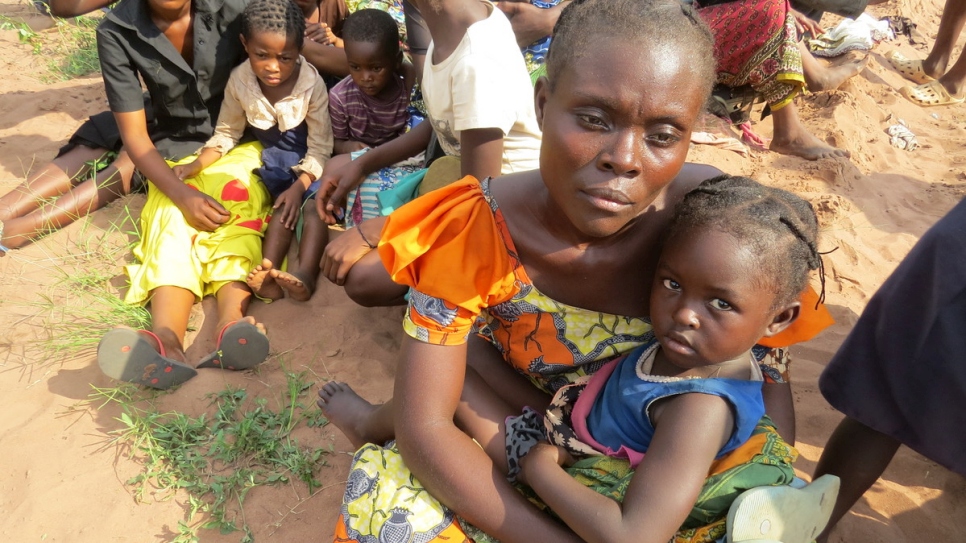
The Sustainable Development Goal three seeks to ensure healthy lives and promote well-being for all peoples at all ages. Providing humanitarian assistance is crucial to reducing vulnerabilities of people who are forcibly displaced. In Angola, the UNHCR is partnering local administrative authorities in delivering access to essential medicines and vaccines on a sustainable basis.
For refugees and host populations, availability of adequate health services can have significant impact on their wellbeing. Increased demand for health services by both population groups can stretch local resources and create a shortage in personnel and medical supplies.
In the municipality of Lóvua under Lunda Norte local administrative area, UNHCR is supporting the government in developing the capacity of health workers. Lóvua has just one health centre to serve about 12,000 inhabitants and 20,000 Congolese refugees. This health centre has no doctor meaning the 13 nurses must be trained to undertake and handle medical cases.
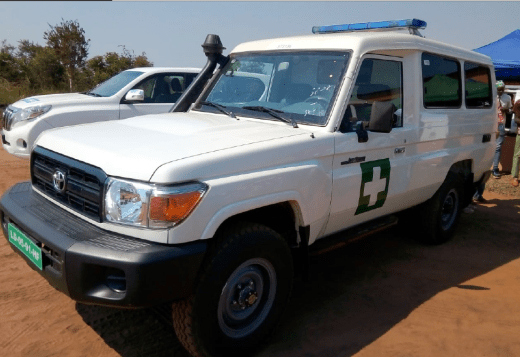
UNHCR is partnering Medicos del Mundo and the local authority to engage in biweekly immunisation campaigns, weekly health consultations at three health posts and an ambulance to provide transportation to the health centre in case of emergency.
Commendable as these assistance may seem, there are still challenges ensuring sustainable health delivery and access. Dr. Antonio Muzala who is Lóvua’s Municipal Director of Health explained, “we have a challenge with human resources as we are understaffed, for instance, we do not have a proper doctor onsite.” Other top challenges are lack of basic health infrastructure and poor sanitation and demanded the UNHCR render more support in the area of capacity building.
However, inadequate government investments stifle sustainable healthcare delivery and humanitarian funding is inadequate to meet rising needs of both the host and refugee populations. Even when government funding is available, localities with humanitarian presence may be excluded.
With limited funding, resources and capacity, humanitarian support with government cooperation should aim at the following;
- Targeting – Mitigation measures must be targeted at the most vulnerable community members irrespective of their migration status. This would most likely be politically influenced but policies that are more humane will benefit refugees and also serve the host communities interests.
- Context-specific issues – Efforts should be made to address prominent health issues peculiar to the community. The reason behind this is that previously existing health challenges can be exacerbated with the influx of refugees. A good starting point is enhancing access to adequate water, sanitation and hygiene materials.
- Strengthen services – Humanitarian actors and the government should focus on ensuring the sustainability of few delivered services. Available resources can be utilised to scale up services particularly in the areas of capacity, infrastructure, operations and maintenance with an eye on medium term sustainability.
- Promote human security – Two means through which human security can be promoted are protection and empowerment. A factor that straddles both means is access to employment opportunities. Stakeholders need to formulate the delivery of assistance in a manner that can better stimulate economic activity within the host community. Self-reliance is key to restoring their dignity, as well as their ability to earn a living.
- Integrate psychosocial health – Vulnerability has multiple dimensions which impacts people’s sense of self, psyche and behaviours. Both displaced and host populations’ experience of loss exposes them to trauma that may hinder their desire to engage in health seeking or employment activities.
Featured image credit to UNHCR/Pumla Rulashe.
Bolaji Ogunfemi is the Administrator of Afrodevelopment. He can be reached on b.ogunfemi@afrodevelopment.org or on Twitter @BolajiOgunfemi.
Download the UNHCR document here.
 afrodevelopment.org