

By Bolaji Ogunfemi
A negligent discharge occurs when a weapon is fired unintentionally because the person controlling it fails to exercise the care demanded by its destructive capacity. Harm may not have been the objective. That does not make what happened an innocent accident. Someone had control of the weapon. Someone knew, or ought to have known, what it could do.
This metaphor provides a useful way of understanding the dismantling of the United States Agency for International Development and its consequences for Mozambique’s HIV response.
In January 2025, President Donald Trump ordered an immediate 90-day pause on United States foreign development assistance. The stated purpose was to assess whether programmes were efficient and aligned with American foreign policy. What followed went far beyond a cautious evaluation. Programmes were suspended, contracts terminated, organisations destabilised and USAID’s functions transferred to the US Department of State. By July 2025, the State Department announced that USAID would no longer implement foreign-assistance programmes. Programmes built over many years suddenly had to determine whether they could continue operating at all.
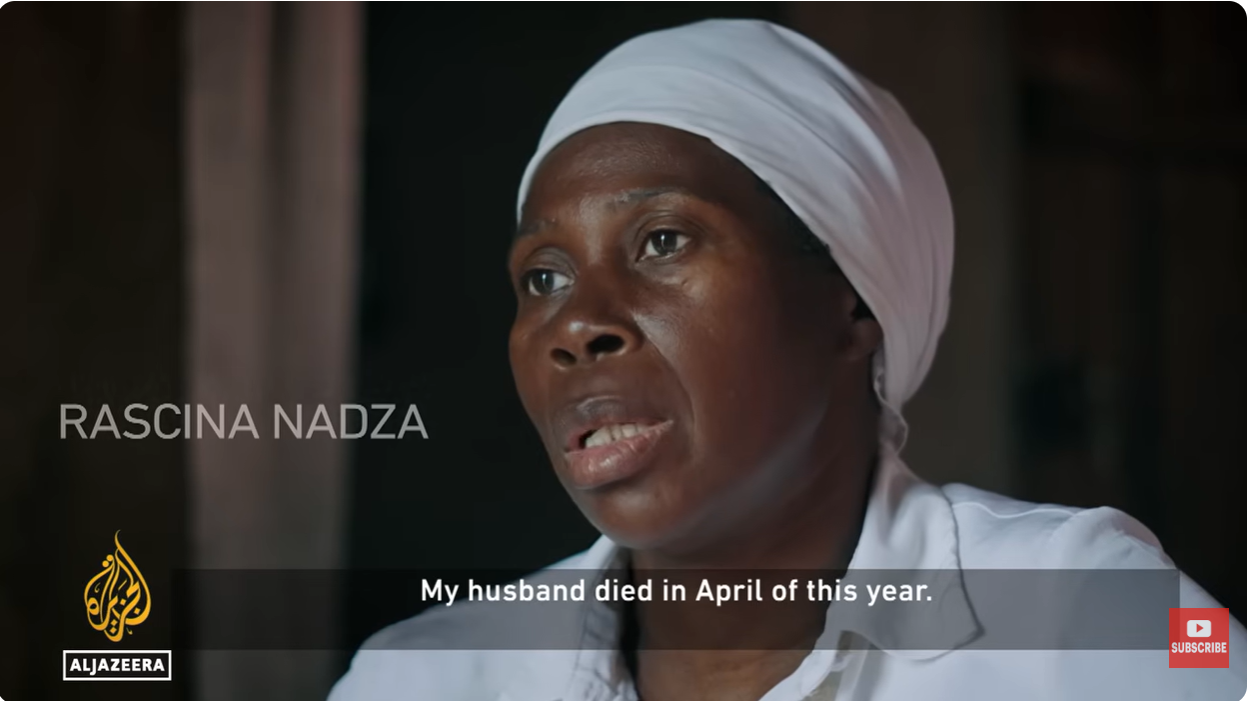
An Al Jazeera People & Power documentary, Elon and the Other Gaza, traces the consequences of these decisions to Gaza Province in southern Mozambique. Its title draws attention to one of the most extraordinary claims used to justify the assault on USAID: that the agency had been preparing to spend $50 million on condoms for Hamas in the Palestinian Gaza Strip.
The allegation was memorable, politically useful and unsupported by credible evidence. The story of the “other Gaza” is therefore not simply about a mistaken place name. It is about what happens when misinformation, concentrated political power and an aid-dependent health system collide.
The claim that pulled the trigger
In January 2025, White House Press Secretary Karoline Leavitt claimed that the Department of Government Efficiency and the Office of Management and Budget had discovered $50 million intended to fund condoms in Gaza. President Trump subsequently repeated the allegation, adding that Hamas planned to use the condoms to make bombs.
No publicly available evidence substantiated either claim.
USAID’s commodity records did not show condoms being supplied to the Palestinian territories. The International Medical Corps, which was identified as the presumed recipient of related funding, stated that no US government funding had been used to purchase or distribute condoms or provide family-planning services. Its USAID-supported work in Gaza concerned field hospitals, surgical care, malnutrition treatment and maternal and newborn healthcare.
Independent investigations by Reuters and the Associated Press consequently found no evidence for the $50 million allegation.
It would nevertheless be too simple to argue that this single falsehood caused USAID’s dismantling. The agency had already become the target of a wider ideological campaign that portrayed foreign assistance as corrupt, wasteful and contrary to American interests. The condoms story functioned as an emotionally charged illustration of that narrative. It reduced a complex system of humanitarian and development cooperation to an apparently absurd expenditure that could be mocked, circulated and condemned without serious investigation.
That is where the negligence begins. Decisions capable of affecting millions of lives were defended through political spectacle rather than rigorous programme evaluation.
Mozambique’s Gaza was not an imaginary expenditure
Gaza Province is not merely a clever counterpoint to the Palestinian Gaza. It is the Mozambican province with the country’s highest recorded adult HIV prevalence.
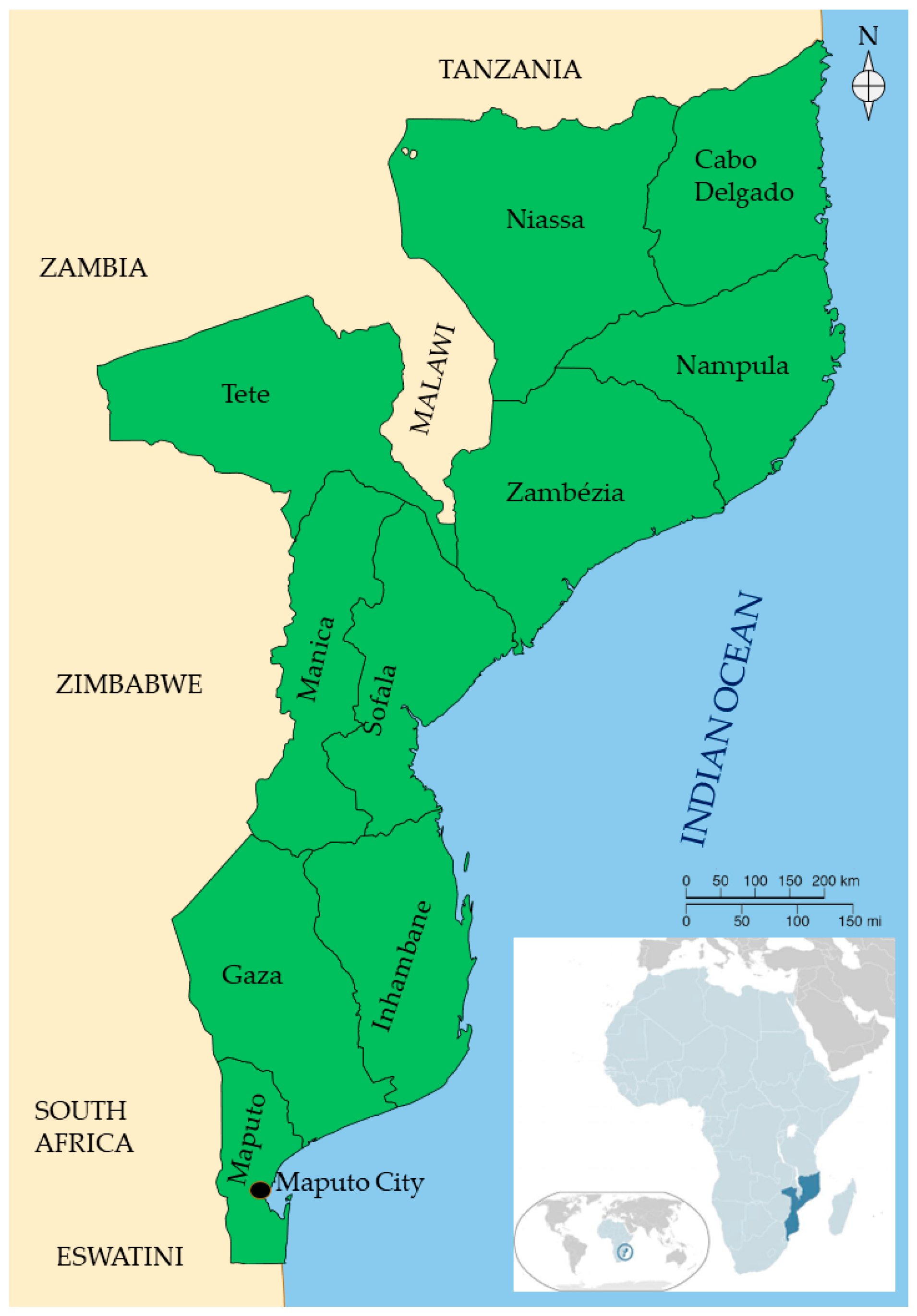
Mozambique’s 2021 Population-Based HIV Impact Assessment estimated that 12.5 per cent of adults nationally were living with HIV, approximately 2.1 million people at the time. Prevalence in Gaza Province was considerably higher, at 20.9 per cent. Among young Mozambicans aged 15–29, prevalence among women was approximately two to three times that recorded among men.
These figures describe more than the scale of infection. They reveal where the consequences of service disruption are likely to be concentrated: among women, young people, economically marginalised households and communities requiring sustained access to testing, treatment and adherence support.
Before the funding crisis, Gaza had achieved viral-load suppression of approximately 80.3 per cent among adults living with HIV—the highest provincial level reported in the survey. That success did not mean the epidemic had been solved. It demonstrated that sustained treatment systems were producing results.
Those systems were deeply connected to American support. UNAIDS reported that PEPFAR contributed approximately $355.5 million to Mozambique’s HIV expenditure in 2022. By 2024, about two million people were receiving antiretroviral treatment, with a substantial majority attending PEPFAR-supported facilities. UNAIDS estimated that 82 per cent of PEPFAR-funded activities in Mozambique were affected by the stop-work orders.
An abrupt interruption in such a system does not remove a marginal administrative expense. It threatens the network through which treatment becomes possible.
Among young Mozambicans aged 15–29, prevalence among women was approximately two to three times that recorded among men.
A health system is more than a shipment of medicines
Political discussions of foreign assistance frequently treat funding as if it moves directly from a donor treasury to an anonymous foreign recipient. HIV programmes operate differently.
Antiretroviral medicines must be procured, transported, stored and dispensed. Patients require testing, counselling and clinical monitoring. Laboratories must process viral-load results. Community workers trace people who have discontinued treatment, support adherence and connect marginalised populations with formal health facilities. Data systems identify service gaps and emerging patterns of infection. Local organisations translate national strategies into culturally and socially accessible interventions.
These functions are interdependent. Removing funding from one part can create failures elsewhere.
When outreach workers lose their jobs, fewer people are tested. When community organisations close, patients may lose trusted routes into care. When monitoring systems deteriorate, health authorities have less reliable evidence for allocating limited resources. When treatment is interrupted, individuals face increased illness while the possibility of onward transmission and drug resistance grows.
The damage is therefore systemic rather than proportional. A 20 per cent reduction in funding does not necessarily produce a 20 per cent reduction in outcomes. It may disable relationships and institutional capacities that took years to establish.
This is what makes the discharge negligent. The foreseeable consequences extended far beyond the contracts being cancelled.
Who fired the weapon?
Al Jazeera’s documentary understandably foregrounds Elon Musk and the role of the Department of Government Efficiency. Yet responsibility should not be reduced to one powerful individual.
Musk amplified allegations about USAID and promoted its closure. But the agency’s dismantling also involved presidential authority, the State Department, the Office of Management and Budget and a political movement committed to subordinating development assistance to a narrow interpretation of “America First”.
Concentrating responsibility exclusively on Musk would obscure the institutional character of the decision. This was not simply a billionaire acting impulsively. It was an exercise of state power, enabled through executive authority and implemented through public institutions.
The relevant development question is therefore not only, “What did Musk do?” It is: How could an aid architecture upon which millions depended be destabilised so rapidly by a small group of actors located thousands of miles from the affected communities?
The answer lies partly in the extraordinary asymmetry of international development. Donor governments often retain the power to initiate, redesign or terminate programmes. Recipient governments, local organisations, health workers and affected communities exercise much less influence over these decisions, even when they bear almost all the consequences.
The United States could redefine its national interest almost overnight. Mozambique could not replace hundreds of millions of dollars, specialised supply systems, technical infrastructure and community-delivery networks within the same period.
How could an aid architecture upon which millions depended be destabilised so rapidly by a small group of actors located thousands of miles from the affected communities?
Dependency does not excuse abandonment
The crisis also exposes an uncomfortable weakness within the international development system: essential public services in some countries remain dependent on political decisions made elsewhere.
It is reasonable to ask why, after decades of international assistance, Mozambique’s HIV response remained so vulnerable to a change of government in Washington. Development cooperation should strengthen national institutions, expand domestic fiscal capacity and progressively reduce exposure to external political shocks.
But identifying aid dependency is not the same as legitimising abrupt donor withdrawal.
A hospital does not become financially sustainable because its principal funder closes it without warning. A community organisation does not become localised because its foreign grant disappears. Responsibility cannot simply be transferred to national governments and communities without transferring the resources required to exercise it.
This distinction matters because “sustainability”, “resilience” and “localisation” can become convenient languages of abandonment. Communities may be celebrated for adapting to financial shocks they had no role in creating. Local organisations may be expected to continue services with voluntary labour after paid programmes disappear. Governments confronting debt, limited revenue and competing public needs may be told to assume responsibilities immediately that donors helped structure over decades.
A responsible transition towards domestic leadership must be negotiated, gradual and adequately financed. It requires a timetable, protection for essential services, joint risk assessment and clear accountability. Sudden withdrawal is not localisation. It is the externalisation of risk.
From preventable negligence to possible recklessness
Negligence is the most defensible description of the available evidence. It does not require proof that American decision-makers intended to create an HIV crisis in Mozambique. It requires showing that they exercised substantial power without the level of care that its foreseeable consequences demanded.
Several elements support that judgement:
- a prominent claim used to discredit foreign assistance lacked credible evidence;
- sweeping decisions preceded comprehensive country-level impact assessments;
- funding interruptions affected life-sustaining programmes;
- implementation moved faster than recipient systems could realistically adapt; and
- affected governments, organisations and communities possessed limited influence over the process.
The more difficult question is whether the conduct became reckless.
Recklessness implies that a decision-maker knew of a serious risk and consciously disregarded it. International health institutions issued explicit warnings. UNAIDS reported that the sudden withdrawal of the largest contributor to the global HIV response had disrupted treatment and prevention programmes across low- and middle-income countries. Its modelling suggested that the permanent loss of previously available support could produce more than six million additional HIV infections and four million additional AIDS-related deaths by 2030.
These are projections, not observed deaths that can automatically be attributed to a single government decision. They nevertheless establish that the risks were neither obscure nor unforeseeable.
If decision-makers continued dismantling programmes after receiving credible warnings, without adequate mitigation or transition arrangements, the boundary between negligence and recklessness becomes increasingly difficult to maintain.
What responsible development practice now requires
The disruption in Mozambique should prompt more than emergency efforts to replace lost American funding. It should generate a structural response that protects essential services while shifting greater authority towards African governments, institutions and communities.
1. Create an African mechanism to protect essential health services
The African Union, Africa CDC, African Development Bank and regional economic communities should establish a jointly governed contingency mechanism for sudden external-financing shocks.
It should provide temporary bridge financing for services whose interruption creates immediate public-health risks, including antiretroviral treatment, diagnostic laboratories, medicines, supply chains and community-based patient support.
This would not replace donors or remove governments’ responsibility for domestic financing. It would give countries time to manage an orderly transition rather than allowing a political decision abroad to become an immediate health emergency.
2. Make responsible withdrawal a requirement for development partners
Major donors should be required to prepare responsible-exit arrangements before terminating programmes supporting essential public services.
These should include advance notice, health and social impact assessment, consultation with governments and affected communities, continuity arrangements for medicines and patients, transfer of data and technical capacity, and transitional financing.
Where corruption or misconduct justifies immediate suspension, patients and frontline services should still be protected. Donors should also publish country-level assessments of terminated programmes and finance corrective measures where preventable disruption has occurred.
3. Turn African health-financing commitments into funded national plans
Mozambique should develop a costed and publicly accessible transition plan for its HIV response, identifying which externally supported services will enter the public health system, what domestic resources will fund them, which services remain vulnerable and how continuity will be monitored.
Other highly aid-dependent African countries should conduct similar vulnerability assessments, with parliamentary, audit and civil-society scrutiny.
The Abuja commitment to health financing remains important, but headline percentages are insufficient. Governments must show that additional resources actually reach primary care, medicines, health workers, community services and high-burden populations.
Domestic financing should increase progressively, but governments should publish realistic transition timelines rather than presenting immediate self-reliance as financially achievable.
4. Diversify financing without creating new dependencies
African countries should reduce dependence on any single donor through a broader financing mix: increased domestic expenditure, bilateral and multilateral support, African development finance, pooled procurement, carefully designed solidarity levies and stronger action against illicit financial flows and avoidable revenue losses.
Diversification should not mean replacing one dominant donor with another, nor shifting costs towards poorer households through regressive taxation, user fees or poorly designed private financing.
Health financing must also be linked to debt reform, international taxation and extractive-revenue governance. Governments cannot sustainably expand health expenditure if debt servicing continues to consume the fiscal space required for essential services.
5. Give African communities decision-making power as well as responsibility
Localisation should be judged by who controls finance, information and programme decisions, not simply by how many local organisations implement externally designed projects.
Mozambican civil-society organisations, networks of people living with HIV, women’s and youth organisations, and community health workers should have formal representation in financing and transition bodies and direct access to flexible, multi-year funding.
Governments and donors should publish how much funding reaches African and community-led organisations, what decision-making authority accompanies it and how affected communities are represented.
Community knowledge is indispensable, but resilience must not become a justification for replacing paid staff, medicines and institutional infrastructure with voluntary labour.
The discharge travelled; accountability must do the same
The story of Mozambique’s Gaza Province reveals a basic truth about contemporary development: power and accountability remain geographically separated.
The authority to interrupt funding was concentrated in Washington. The health consequences were displaced onto Mozambican clinics, workers, families and communities. Those who controlled the trigger were insulated from much of the resulting harm.
That is why the dismantling of USAID should not be described merely as a bureaucratic reorganisation or unfortunate policy error. It was a negligent discharge of American power: a poorly evidenced and abruptly implemented intervention whose risks were foreseeable and whose consequences travelled across borders.
But stopping there would let the wider development system off too easily and the appropriate response is not an uncritical defence of the old aid system. A structure that leaves essential African health services exposed to political decisions in another country is itself deeply insecure. The longer-term task is to build nationally led, diversified and publicly accountable systems in which African institutions possess greater control over priorities, finance and implementation.
Those who controlled the trigger were insulated from much of the resulting harm.
African governments and institutions have harder work ahead: building fiscal capacity, diversifying financing, strengthening regional mechanisms, protecting essential services and transferring meaningful authority towards national and community institutions.
Donors have obligations too. A country may change its foreign policy. It may reduce aid. It may close programmes. What it cannot reasonably do is exercise enormous power over other societies and then treat the consequences of that power as somebody else’s responsibility. The destination should be neither permanent dependence nor sudden abandonment. It should be a negotiated transition towards African-led systems with the money, institutions and political authority needed to make that leadership real.
Until then, there is one lesson from the other Gaza that should be difficult to forget:
the trigger may be pulled in Washington, but the bullet does not stop at the border.
 afrodevelopment.org