
By Bolaji Ogunfemi
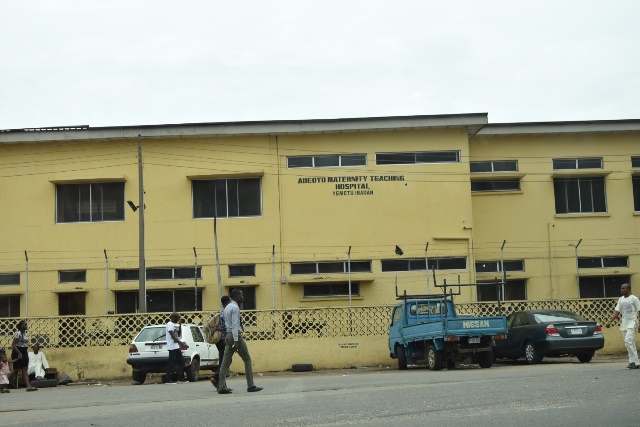
In late May 2026, a new Children’s Emergency Ward was commissioned with fanfare at the Adeoyo State Maternity Teaching Hospital in Ibadan, the capital of Oyo State in south-western Nigeria. Weeks later, a man stood inside that same hospital at night, phone raised, alleging in a video which circulated on X that no doctors or nurses were on duty to attend to his relative.
The obvious reading is a staffing scandal. It is the wrong first reading. The more revealing fact is not that the night shift was allegedly thin, but that a family in crisis had nowhere to take an emergency except the doors of a teaching hospital, at night, with no functioning primary care beneath it and no referral pathway to catch, stabilise or route them. The video does not show one hospital failing. It shows the shape of a care pyramid that has collapsed into its apex.
Who is supposed to catch you first
Nigeria runs a three-tier health system, and the division of labour is not informal custom, it is written into the National Health Act 2014, the first statute in the country’s history to describe the arrangement in law. Local governments own primary care, states own secondary care, and the federal government owns tertiary care: the ward clinic, the general hospital and the teaching hospital respectively.
Notice where the first point of contact sits with the weakest, least-funded tier of government. Primary care is run by local councils, coordinated through State Primary Health Care Development Agencies under the “Primary Health Care Under One Roof” policy of 2013. Whether your first port of call works therefore depends heavily on which state, and which ward, you happen to live in.
This is the internal diversity international readers should hold onto: there is no single “Nigerian” health experience. The federal pledge of at least one functional primary health centre per electoral ward by 2019 was met patchily and abandoned unevenly. As recently as 2026, the National Primary Health Care Development Agency’s own dashboard logged 3,715 non-operational centres spread across 19 states and the Federal Capital Territory, a failure that is patterned, not uniform, and worst where sub-national government is weakest. A woman in Ondo with a treatable fever finds her ward clinic shut, travels to a general hospital, and is sent onward to a teaching hospital built for transplants but running a malaria ward instead. Overlaps between the tiers and political interference weaken coordination further still.
The care pyramid that never held
Primary centres are meant to be the first contact and the gatekeeper: treat the routine, stabilise the urgent, and refer upward only what they cannot handle. On paper the network is enormous, just under 30,000 facilities. In practice it barely functions.
- Barely a fifth of those roughly 30,000 centres are fully functional; a system designed to serve at least 70% of the population reaches only around 20% of it.
- The machinery that should connect the tiers is close to absent. One nationwide assessment found only 11% of primary facilities had any referral system at all; investigators have described the national referral system as almost non-existent.
- Nigeria has around 15 primary centres per 100,000 people, against nearly 240 per 100,000 in parts of Europe.
When the base does not work, the load does not vanish, it travels up. Patients are routinely referred, or take themselves, to already overcrowded secondary and tertiary hospitals, driving up waiting times, costs and avoidable deaths. Ibadan proves the point: even the University College Hospital, the city’s apex tertiary institution, still carries a heavy primary and secondary caseload precisely because primary care in the region has broken down. A maternity teaching hospital such as Adeoyo becomes the default emergency room for all comers because there is no working tier beneath it to say otherwise.
Filming is not triage but a hospital is not a first port of call
Many who watched the video criticised the man for confronting a non-clinical staff member and broadcasting his grievance rather than transferring his relative. The criticism has force: a phone does not resuscitate anyone, and the clinically correct response to an unstaffed emergency room is immediate transfer.
But locating the fault in one frightened relative mistakes the symptom for the disease. In a system with a functioning base, he would not have arrived at a teaching hospital at midnight in the first place; a nearby primary centre would have received him, stabilised the patient and arranged an ordered referral with a phone call and an ambulance. None of that infrastructure reliably exists. It does not help that most Nigerians pay for care at the moment they need it: between roughly 69% and 77% of health spending comes straight out of household pockets, among the highest rates in West Africa, and although the NHIA Act 2022 made health insurance mandatory, enrolment covers only about 21 million people in a country of some 220 million. Faced with an emergency, no pathway and a cash bill, families do the only thing available, head for the biggest hospital they know and then, finding no help and no visible complaints channel, reach for the one lever they believe they have: the camera. The video is what an accountability vacuum looks like from the bottom of a broken pyramid.
Staffing and money matter but they are not the missing floor
None of this excuses thin rotas. Nigeria’s health workforce is genuinely depleted: the country sits on the WHO Health Workforce Support and Safeguards List 2023, with fewer than four doctors for every 10,000 people against a global median of 49 doctors, nurses and midwives, as japa migration draws clinicians abroad.
But staffing and financing are legs of the table, not the floor beneath it. Fully staff and fund Adeoyo tomorrow and you have a better-run apex still swamped, because every emergency for miles still lands there. The workforce crisis thins each tier; the referral crisis funnels the whole country into the top one. Strengthen the legs without laying the floor and you simply raise a sturdier table over the same hole.
What should change
The Adeoyo episode points to fixes that are structural, sequenced and largely affordable:
- Rebuild the base before enforcing the gate. Gatekeeping cannot be imposed on patients while primary centres remain shut, unstaffed or unstocked. Nigeria’s Basic Health Care Provision Fund already channels 45% of its resources to primary care operations through the NPHCDA; the task is to spend it on function, and to hold states and their primary care agencies to the unmet one-centre-per-ward pledge.
- Activate the referral-and-transfer pathway that already has funding. The same fund carries a dedicated 5% gateway for emergency medical treatment. States should use it to stand up what the video’s victim lacked: a working emergency line, designated receiving facilities by condition, and ambulances that actually run.
- Close the coverage gap so crisis is not cash-gated. Accelerating NHIA enrolment matters most for the poorest wards, where an out-of-pocket bill at the hospital door is itself a barrier to timely care.
- Match facilities to their tier, and publish it. A teaching hospital should not be the silent default for every night-time emergency. Each facility’s scope, hours and receiving capacity should be defined and publicised, so patients and referrers know where to go.
- Coordinate donors around the pyramid, not single wards. Diaspora and philanthropic capital such as the ward funded by the foundation of footballer Karim Adeyemi, is welcome, but a new emergency ward at the apex, without a functioning base to filter demand, moves the bottleneck rather than clearing it. Gifts should be pooled with the state around primary care and referral, not ribbon-ready buildings.
- Make functionality visible. The NPHCDA already runs a facility dashboard; states should publish, ward by ward, which primary centres are open, staffed and stocked. Transparency is cheaper than a new building and does more to restore trust.
The deeper emptiness
The empty night shift in the video may well be real. But the more consequential emptiness lies below it in the missing, shuttered and unreferring tiers that should have caught this emergency long before it reached the teaching hospital’s doors. Nigeria keeps commissioning wards at the top of a pyramid whose base has fallen out. Until the country rebuilds primary care and the referral system that connects it upward, teaching hospitals will remain the first and last resort for everyone, at every hour and the cameras will keep rolling on the wrong culprits.
 afrodevelopment.org