Featured

Between elite power and social mobilisation in Nigeria

By Bolaji Ogunfemi

‘Leave no one behind’ is the catchphrase of the 2030 Agenda for Sustainable Development. As development challenges become multifaceted and complex, societies get increasingly fractured with the continuous widening of the gap between the privileged and the rest. Inequality constitutes a threat to eradicating poverty, promotes elite capture, prevents building peaceful and prosperous societies, and hinders social mobilisation.

Elite power concerns a group of people in a society who has captured economic and political power, thereby widening the societal gap in such a way that undermines poverty eradication and shared prosperity. Nigeria, like other countries of the world, have elites who hold levers of power and use them to influence, whether intentionally or by design, the country’s development pathway and extent of public participation.

Social mobilisation is a process of motivating and getting individuals, groups and communities to organise and address common development problems facing them. These levels of mobilisation operate together and exacerbate one another in profound ways, thus compounding experiences of inequality and the power leverage elites hold. Stereotypes and normative assumptions of elites often shape layers of discrimination embedded in social mobilisation.

What is the nature of elite power in Nigeria and the institutional factors that perpetuate them?

Nigeria experiences elite power in uniquely different ways but is not insulated from forces at the global scene. Neoliberalism has created and helped perpetuate various forms of avenues for elites to avoid the rules they set but impose on other groups of the society. This condition promotes a battleground where not what is best for the society is the bounty but having captured more losers than winners.

Since where you stand influences where you sit, identity, economic and religious politics have been distinctive features of the country’s power relations. Nigeria’s elite makeup is a formidable relationship between the politicians, religious leaders and the business class. Politicians have amassed enormous wealth and influence since the country returned to democratic rule in 1999. This mix of wealth and power manifests in changes to people’s agency, social structures, policies, and laws. Through various means, including electoral malpractices, selective application of the constitution, arrogating ridiculous salaries to themselves, promoting oppressive regulations, and denial of basic rights, the political class has effectively made itself the most powerful force in the country.

The role religious leaders play in the country is a complex and unmissable one. In the northern part of the country where they tend to also double as traditional leaders, they wield enormous power in matters of culture, commerce, morality, and jurisprudence. Leaders of key religions in the country have played some roles in supporting or criticising the political establishment. They share close relations with the political class, who often use them as a vehicle to reach their grassroots supporters or opposition.

Those who occupy primarily traditional positions bear no role in Nigerian governance structure. As a consequence, this situation has significantly whittled down their sway. Most of them are unwilling to speak truth to power about the social consequences of political decisions. While some of those who get outspoken may get punished, most are ignored. A recent illustration is the case of the former Emir of Kano, Sanusi Lamido Sanusi. He was dethroned for being too critical of political and traditional elites regarding their callous indifference on issues of development and poverty. In the BBC’s article announcing his dethronement, it says, “Mr Sanusi was seen as a reformist and had been critical of some government policies.”

A Tweeter user expressing his views on Sanusi Lamido’s dethronement in March 2020

Economic rules of the game are set by political officeholders. Since businesses sometimes pursue interests beyond legal structures, they seek to win over the political to achieve their goals. Nigeria has produced businessmen, particularly since the birth of the fourth republic in 1999 and the sweeping neoliberal economic policies that followed. These policies benefited, to a large extent, those with close links with the political elites. Some are rewarded with bewildering incentives that propelled their profits. This can permit monopolies which they often exploit to the maximum. Businessmen have expanded their empires and wealth by continually cementing their ties with the Nigerian political elites.

Numerous institutional factors perpetuating this gap between the elites and the rest of the society. They are multifaceted, covering social, political, electoral and legislative dimensions. Those occupying the political realm, most profoundly, provide a structure to the citizen’s everyday life. Corruption, elite capture, nepotism and rent-seeking are pervasive in the Nigerian institutional landscape. Proofs of these have been sufficiently documented elsewhere and will not be detailed here. The scale of inequality between the haves and the have-nots soared significantly in the last decade and concerns about social justice and equity reached unprecedented levels. The machinery of government is source of self-enrichment to the political elites and is shared with vested interests in religious and business circles.

What are the consequences for social mobilisation at local and national levels?

Elites play a key role in the deepening of social and economic cleavages in the country. These are most demonstrated by rising poverty levels, gagging of the informal sector, and poor state of public services. Today, the country houses the highest number of poor people in the world at 100 million. Unemployment and underemployment have simultaneously increased alongside poverty levels coupled with an explosion of the youth population. The elites, particularly those belonging to the political class, stifle opportunities for equitable prosperity distribution and wield their influence in perpetuating a lopsided society.

Productivity in the country’s sensitive informal sector is undermined by the elites and institutions meant to ensure their growth. Economic and social welfare policies have been expressly deployed by the political class to garner patronage and consolidate power. Misallocation of resources, misappropriation of opportunities and biased policymaking became the norm. To illustrate an example, OXFAM published a report in 2017 that captured the state of inequality in the country and explored its drivers.

The absence of adequate public services and access to them is deleterious to social mobilisation. An often overlooked feature of public services aside from the utility for positive human development indices is their ability to stimulate the economy. With the economy not generating enough jobs, a difficult business environment and weakening domestic investment become the order of the day. A climate like this cannot produce active citizenship or effective social mobilisation.

Most sobering is the country’s teeming youth population who are unspared from continuous and stubborn disregard by elites. A dangerously near snobbery that fuels poverty, insecurity, and crime. However, many remain dogged and diffuse beneficent results beyond all expectations. As institutions are increasingly co-opted, the diversity of their skills, novelty, and brilliance is at risk of being doomed to lethargy and embitterment. The tech hub, which is perceived as an outlier, can be of immense resource to social mobilisation in the country but is being mugged by the elites.

What needs to be done to overcome these challenges?

The country can consider different strategies to mobilise citizens, diverse political actors and social groups for transformative change. These approaches implemented together would go a long way in driving progressive change and push forward the vision of the 2030 Agenda. However, it is crucial that these are pursued in a conducive and well-concerted policy space.

  • Access to information: The Nigerian government should prioritise disclosure and freedom of information. Much details about policies, legislations, contracts, tax systems and appointments are shrouded in secrecy. Recent developments have shown that the state is increasingly becoming intolerant of free speech as demonstrated principally by restrictions on social media.
  • Inclusion and participation: Voices calling for a restructuring of governance modalities have gotten louder in recent times. Arguments that the current political arrangements don’t sufficiently encourage equity are well-founded. To heed this call would promote the pursuit of measures to safeguard the policymaking and implementation processes from elite capture although only this is insufficient.
  • Accountability: Impunity is a defining illness among Nigerian elites. Strong institutions must be in place to serve the public in fairness and equality following the rule of law. Responsibilities of different levers in governance must be stipulated as well as the linkages between them. Not only will this enable citizens better manage their expectations, but it will also foster engagement between both parties in the pursuit of development outcomes.
  • Local organisational capacity: A successful level of accountability and trust breeds the ability of the people to organise. Through various civil society organisations, associations, and community groups, they can collaborate to address common development issues or present their demands to the right authorities.
  • Address poverty: Soaring poverty levels continue to force people who want to stay above the basic threshold of subsistence to align with any of the three elite groups in the country. The Nigerian system is fiercely centred around power explotation which would demand collaborative social mobilisation to upset. The current elite structure is known to further entrench the mass of the people in biting poverty, but efforts at improving their standards of living can strengthen their resolve to mobilise.

Agenda 2030 is ultimately a partnership project. Inequalities are structural and systemic. They have steadily grown and progress towards wellbeing for all peoples is depressingly low in the country. On this point, levelling out social stratification and devolving power to non-elites remains fed by many currents from the long stream of development reform.
Featured

New directions in social policy: lessons from and for Nigeria

By Bolaji Ogunfemi

Social policy is a package of public interventions that aim to guarantee adequate and secure livelihoods, income and well-being, and that enable all individuals to strive for their own life goals. When the Structural Adjustment Programme introduced in 1986 was adopted and implemented by Nigeria at a time of depressed oil prices as social policy at the suggestion of the World Bank, it was hoped the strategy holds the key to eradicating poverty facing the multitudes of their people. Three decades after it was first launched, it has proven to be an abysmal failure. Reasons for this has been widely assessed in different fora among various stakeholders and is not the purpose of this article.

Realising that the SAP has underperformed and the risks and opportunities associated with neoliberalisation, Nigeria since 2015 seem to have started reviewing their stance towards social policy and programmes. This, however, is not to say that the neoliberal force on agenda setting has weakened. In light of contemporary development context of sustainable development goals, it is imperative to assess whether new policy options and approaches are fundamentally different from what used to obtain.

State-led social policy plays a significant role in development and social welfare. The government of a country is primarily responsible for erecting structures to guarantee the welfare of its people. However, this has been largely challenging for Nigeria. Much of the new range of policy choices seem to be disparately applied, inconsistent and poorly understood. This article carefully examines these new policies in Nigeria. Answering this question will be important for understanding whether they offer viable approaches for tackling social development challenges facing the country today.

Protection

Social protection involves those policies and programmes meant to reduce people’s vulnerability and exposure to risk by promoting efficient labour markets and enhancing their capacity to manage economic and social shocks such as unemployment, sickness, disability and old age. Since the launch of the Sustainable Development Goals in 2015, the Nigerian government have prioritised social protection streams.

The National Social Investment Programme (NSIP) is a portfolio of programmes launched in 2016 by the Nigerian government to deliver socio-economic support to the disadvantaged Nigerians across the Nation. The Job Creation and Youth Employment (N-Power) is focused on getting unemployed Nigerian youths in a cash transfer scheme which pays them a monthly stipend of #30,000 monthly for three years. Government Enterprise and Empowerment Programme called TraderMoni is a government interest free loan programme for petty traders and artisans for amounts ranging between #10,000 and #100,000. From the Social Investment Programme comes National Home Grown School Feeding Programme which provides lunch to primary school children to improve the enrolment of primary school children and reduce the current dropout rates. National Cash Transfer Programme provides monthly supplemental income support of #5,000 to one million poorest households.

These schemes are haphazardly implemented and qualification requirements, in practice, is unclear. Labour policies and laws must be reviewed as there are still gaps in them which does not adequately protect the people like unpaid salary and allowances, check predatory private employers, benefits and support for people of working age in case of maternity, disability, work injury; and pension payment for retired workers is still dismal. The National Social Insurance Trust Fund is the government agency established to provide assistance through social insurance, tax-funded social benefits, and other similar schemes guaranteeing employee security but not yet widely accepted. With high number of informal workers and changing nature of work in the country, the condition of having an employer to benefit from the fund need to be discarded.

Services

Services such as energy, telecommunications and transportation; financial services which facilitate transactions and provide access to finance for investment; health and education services which contribute to a healthy, well-trained workforce; legal and accountancy services as well as security underpin a healthy social policy. While decent progress has been made in telecommunications and transportation, the country has not made remarkable progress in areas of energy, finance for investment, health and education services. Spending on services has not seen an increase from what used to obtain. The National Bureau of Statistics has improved its data indices on access to services in recent years and it is important that the government builds for better policy decisions but more needs to be done in household surveys to further capture deprivations.

Institutions

A country’s institutional arrangement is a crucial aspect of social development policy. They implement the policies and also influence the rules of the game which conditions the practice of social development. A Ministry of Humanitarian Affairs, Disaster Management and Social Development is the custodian institution for social development policy implementation. Being a federal administrative structure, effectiveness of the local government is particularly important to poverty eradication and sustainability of programmes by localising the different cultural, climatic, and economic zones of the country.

The judicial system has also degenerated and fair dispensation of justice is not always guaranteed. Critical institutions remain weak and ineffective due to decades of underfunding, corruption, politicking and low initiative. Structure of accountability in social policy design and implementation is also unclear making policy coordination among government institutions challenging.

Civil society organisations have been muzzled since 2015 as the government continue to crack down on those with alternative opinions. Human rights organisations like Amnesty International have been asked to leave and collaborations with and support of CSOs have progressively weakened. Universities and international agencies and the private sector are all critical stakeholders. While international agencies have been a key partner in social policy programming in the country, this cannot be said of others. Universities are not adequately fulfiling their duty to society by influencing discussions or decisions regarding poverty.

Markets are an important aspect of institutions. They are tools to help realise the kind of society human beings have reason to value through access to goods that satisfy people’s preferences. Nigeria’s market mechanism remains complex and contradictory, and economic policies do not often revolve around efficiency, equitability, sustainability and empowerment. The conditions of the people constituting the human capital that goes into factors of production are crucial to the overall market system but are merely seen as means and not ends in themselves.

The informal sector is important to the country’s employment contributing 65% of Nigeria’s 2017 GDP. Much of the businesses are precarious due to harsh operating environment including poor infrastructure, weak financial base, security forces repression, power politics, poor regulatory control and policy implementation. Strategies to ease business and economic diversification plans launched by the government in 2017, although with some improvements, still face problems of shortage of skilled labour, infrastructure deficit, exchange rate volatility, low productive capacity, poor wages, tax payments, the security of property, cost of operation and major reliance in oil revenue. Although tradeoffs are inevitable in improving markets, more effort should be made in giving it a human face by putting people first.

Political participation

Political participation is another important social development policy stream. At the heart of the democratic practice, it includes attempting to influence the activity of government and the selection of officials, trying to affect the values and preferences guiding the political decision-making process and seeking to include new issues on the agenda. In Nigeria, this is highly influenced by the prevailing political landscape and domestic interests and alliances irrespective of the sector. Creation of policies for improving homegrown ideas and grassroots voices have not seen an active input in the country.

The most significant discussion in this regard is the call for administration decentralisation which has not been accepted by the central government. As a multiethnic country, it is important that inequalities in political participation are minimal, and nepotism and favouritism are sanctioned. Although the Federal Character Commission was established to achieve this by giving voice to the over two hundred and fifty ethnic groups in the country and ensure balance, this has always been a challenge and probably worsen in the past five years. Ensuring fairness in the distribution of socio-economic amenities which is its second mandate cannot be achieved without political participation. Their mandates need to be expanded to include active facilitation of political engagement especially at the local level and independence from the executive as it impedes its effective functioning. Also important is the suspension of the indigene-settler dichotomy guiding access to socio-economic services.

While protests have been met with some resistance through military crackdown, internet discussion groups and cyberactivism have significantly increased citizens’ voice. Currently, there is a debate regarding the need to regulate online discussion particularly the social media due to fake news. While there is no evidence that membership in political parties, interest groups, and voluntary associations have increased, unconventional participation and new social movements are rising and demands greater attention by the government in her social policy development. Aside from the growth of technology and internet access, this condition flow from a dynamic interaction between the people and the wider institutional and political contexts.

Social inclusion

Social inclusion concerns the question of who are those people benefitting and discriminated from having their needs met. It recognises that every individual has rights and improving the ability, opportunity and dignity of those disadvantaged based on their identity. Children and youths, girls and women, internally displaced persons, disabled persons, the elderly, and ethnic minorities are some of the most socially excluded groups in the country. Inexistent service regulation, corruption, nepotism, culture, poor policy implementation are some factors hindering these segments of the Nigerian population from accessing services and participation. These have implications for their human security. With the SDG aiming to boost shared prosperity by 2030, the country will need to enact policies and limit exclusionary tendencies to the minimum. However, merely enacting policies is not enough but a rejig of the institutional framework is also required and translate it into better equity outcomes.

Rounding up

Nigeria has not introduced adequate innovative social policies to meet contemporary development challenges. As the world has ten more years left towards meeting the Sustainable Development Goals, it is imperative that the country design more transformative approaches to social policy that responds to the national challenges identified. A good place to start is stopping excessive public spending used in funding its over-bloated governance structure and invest heavily in education, health, technology and innovation.

Also, a census and building a national multidimensional poverty index are needed. These will be vital for monitoring poverty trends, evaluating poverty reduction policies, national planning, SDG prioritisation, intra-government coordination across ministries, budget allocation and policy formulation. Whether the country is now a neoliberal democratic or social democratic considering a growing welfarist approach to social policy does not matter more than the urgent need to introduce and implement home-made policy structures and patterns which genuinely prioritise human flourishing.

Bolaji Ogunfemi is the Administrator of Afrodevelopment. He can be reached on b.ogunfemi@afrodevelopment.org or on Twitter @BolajiOgunfemi.

Featured

Sub-Saharan Africa and achieving the SDG target for drinking water

Achieving universal and equitable access to safe and affordable drinking water for all by 2030 is a target of the Sustainable Development Goals. Africa has been identified as being at risk of severe water scarcity. Nearly 400 million people in sub-Saharan Africa are denied even a basic drinking water supply.

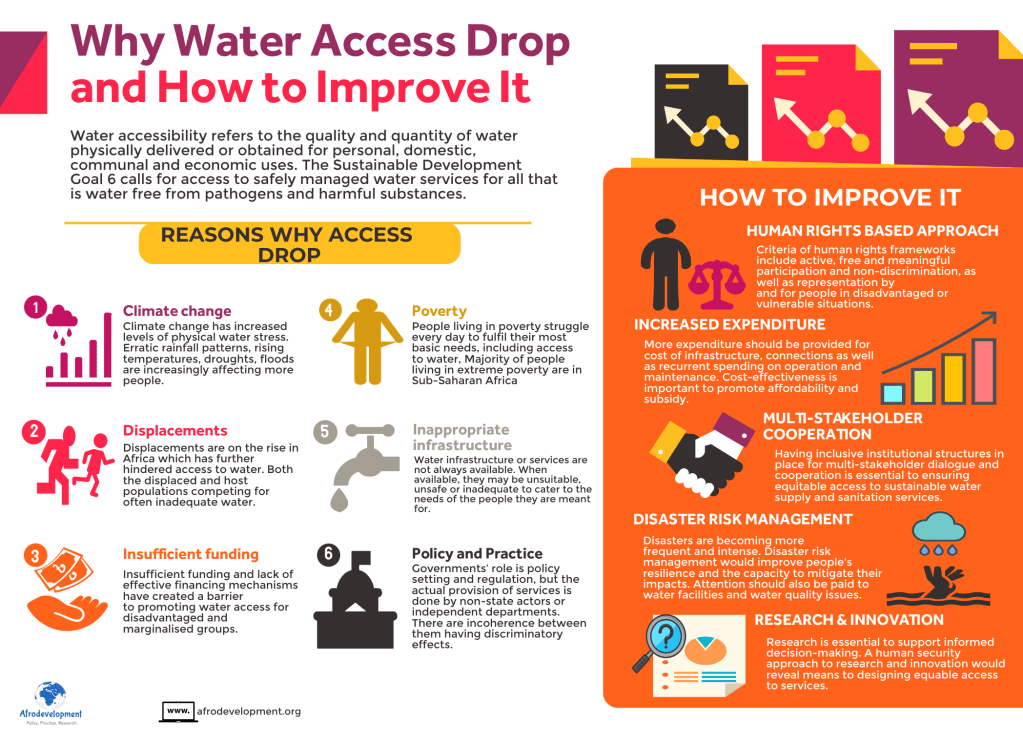
One of the main uses of water for people and households is drinking and have huge impacts on human survival and health. There should be an assessment of the causes of the reduction in water access before suggesting appropriate policy and practice responses. Such assessment must concern what this means for people in different settings including urban, rural, displaced persons camps. Across these settings, six major factors are contributing to low access to safe drinking water.

Climate change has increased levels of physical water stress. Erratic rainfall patterns, rising temperatures, droughts, and floods are increasingly affecting more people irrespective of their location or settlement type. Such hazards are projected to increase in frequency and intensity as a result of climate change. Conflicts have also been predicted to possibly occur due to water scarcity generated by climate change in countries like Mali and Nigeria.

Sub-sahara Africa is currently witnessing its largest forced migration in history. From state internal crises as we have it in South Sudan to regional conflicts like in the Horn of Africa, more people are on the move now than at any time in the past. Even where available, host community and displaced population will compete for access to water which is often inadequate and unsafe.

From state internal crises as we have it in South Sudan to regional crises like in the Horn of Africa, more people are on the move now than at any time in the past.

Insufficient funding is a problem that has plagued the water sector of sub-Saharan countries for decades. This concerns the government and private service providers lacking effective financial mechanisms for service provision. Service provision goes alongside other financial means like tariff structures, subsidies, and CBT, underscoring the importance of increasing public funding for water. With increasing climate risk, experts are calling on governments to adapt this to their funding.

Poverty in the era of the SDGs must be understood as the deprivation of basic capabilities rather than the lowness of income although this does not mean income is not a reason for deprivation. A package of multidimensional factors go into a condition for an impoverished life and these hinder people’s access to water. It must be noted that many people living in multidimensional poverty live in sub-Saharan Africa where 70 per cent of the population is estimated to be multidimensionally poor.

Water infrastructure is not always available. Urban communities which tend to have more infrastructure compared to other settings suffer decrepit water systems. Even when they are available, they may be unsuitable, unsafe or inadequate to meet people’s needs. Water-related natural hazards, such as floods and droughts damage water supply infrastructure, preventing service to millions of people. Infrastructure for water supply is especially scarce in rural areas than other settings. In fact, some researchers have linked the absence of infrastructure to poverty in the region.

Policies and practices have been noted as having a profound impact on water access and promoting social inequalities. They propagate discrimination which excludes access to service for some segment of the population. Entrenched corruption straddles these two factors and further promote exclusion. Management practices in places where water is available can be poor producing inefficiency.

The problems facing access to drinking water discussed are inexhaustive but represents the leading concerns based on recent trends. In addressing these difficulties, a few initiatives have been identified:

Rights-based approach: One such is a human rights-based approach. Aside from prioritising legal and institutional obligations, meaningful participation of the people and principles of non-discrimination must be acknowledged and applied. We come back again to the perspective of capabilities which proposes that all sections of the society have their water needs fulfiled. This is important for social justice and correcting inequalities.

Increased expenditure: It is incumbent upon national governments to drastically increase funding to the water sector. Research has shown that the current levels of funding towards water among many sub-Saharan governmments are below the capital cost required to meet the SDGs. Including considerations of cost of operations and maintenance, subsidies should also be actively incorporated in budgetary allocations for those who cannot afford it.

Multistakeholder cooperation: Institutional structures for the water sector must be clearly defined and multistakeholder dialogue and cooperation prioritised. This is crucial to good governance where institutions not only serve to ensure accountability in fulfiling their respective mandates but also coordinate in programmes and project interventions.

Disaster risk management: About 90 per cent of all natural disasters are water-related especially floods and drought. Flooding damage water infrastructure and pollute water sources while drought hinders physical access to it. Many sub-Saharan African countries have yet to establish and incorporate early warning system mechanisms into their water sectors. Without improved social infrastructure and governance, merely creating disaster risk management mechanisms will not mitigate the short and long term impact of disasters on water.

Research and innovation: More policy-oriented research are needed to support informed decision making. Since the focus of the SDGs includes addressing inequities, more research is needed on groups and individuals who live in vulnerable situations. These research would yield technical innovation as well as the design of models that assesses the multilevel and multidimensional factors that go into water access.

Bolaji Ogunfemi is the Administrator of Afrodevelopment. He can be reached on b.ogunfemi@afrodevelopment.org or on Twitter @BolajiOgunfemi.

A Negligent Discharge: How an Unfounded Foreign-Aid Claim Endangered Mozambique’s HIV Response

By Bolaji Ogunfemi

A negligent discharge occurs when a weapon is fired unintentionally because the person controlling it fails to exercise the care demanded by its destructive capacity. Harm may not have been the objective. That does not make what happened an innocent accident. Someone had control of the weapon. Someone knew, or ought to have known, what it could do.

This metaphor provides a useful way of understanding the dismantling of the United States Agency for International Development and its consequences for Mozambique’s HIV response.

In January 2025, President Donald Trump ordered an immediate 90-day pause on United States foreign development assistance. The stated purpose was to assess whether programmes were efficient and aligned with American foreign policy. What followed went far beyond a cautious evaluation. Programmes were suspended, contracts terminated, organisations destabilised and USAID’s functions transferred to the US Department of State. By July 2025, the State Department announced that USAID would no longer implement foreign-assistance programmes. Programmes built over many years suddenly had to determine whether they could continue operating at all.

An Al Jazeera People & Power documentary, Elon and the Other Gaza, traces the consequences of these decisions to Gaza Province in southern Mozambique. Its title draws attention to one of the most extraordinary claims used to justify the assault on USAID: that the agency had been preparing to spend $50 million on condoms for Hamas in the Palestinian Gaza Strip.

The allegation was memorable, politically useful and unsupported by credible evidence. The story of the “other Gaza” is therefore not simply about a mistaken place name. It is about what happens when misinformation, concentrated political power and an aid-dependent health system collide.

The claim that pulled the trigger

In January 2025, White House Press Secretary Karoline Leavitt claimed that the Department of Government Efficiency and the Office of Management and Budget had discovered $50 million intended to fund condoms in Gaza. President Trump subsequently repeated the allegation, adding that Hamas planned to use the condoms to make bombs.

No publicly available evidence substantiated either claim.

USAID’s commodity records did not show condoms being supplied to the Palestinian territories. The International Medical Corps, which was identified as the presumed recipient of related funding, stated that no US government funding had been used to purchase or distribute condoms or provide family-planning services. Its USAID-supported work in Gaza concerned field hospitals, surgical care, malnutrition treatment and maternal and newborn healthcare.

Independent investigations by Reuters and the Associated Press consequently found no evidence for the $50 million allegation.

It would nevertheless be too simple to argue that this single falsehood caused USAID’s dismantling. The agency had already become the target of a wider ideological campaign that portrayed foreign assistance as corrupt, wasteful and contrary to American interests. The condoms story functioned as an emotionally charged illustration of that narrative. It reduced a complex system of humanitarian and development cooperation to an apparently absurd expenditure that could be mocked, circulated and condemned without serious investigation.

That is where the negligence begins. Decisions capable of affecting millions of lives were defended through political spectacle rather than rigorous programme evaluation.

Mozambique’s Gaza was not an imaginary expenditure

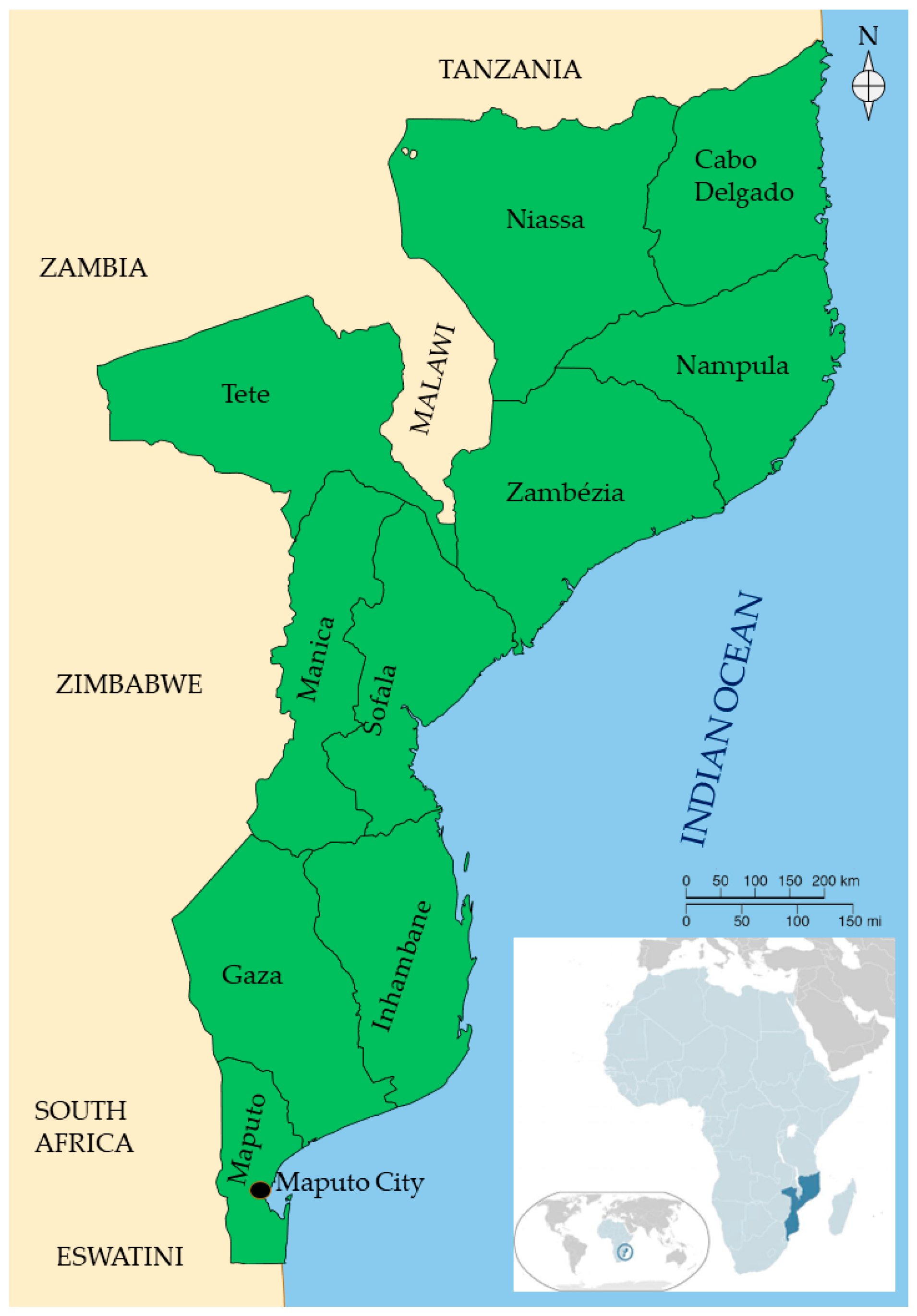
Gaza Province is not merely a clever counterpoint to the Palestinian Gaza. It is the Mozambican province with the country’s highest recorded adult HIV prevalence.

Map of Mozambique showing the Gaza Province. Credit: Encyclopedia MDPI

Mozambique’s 2021 Population-Based HIV Impact Assessment estimated that 12.5 per cent of adults nationally were living with HIV, approximately 2.1 million people at the time. Prevalence in Gaza Province was considerably higher, at 20.9 per cent. Among young Mozambicans aged 15–29, prevalence among women was approximately two to three times that recorded among men.

These figures describe more than the scale of infection. They reveal where the consequences of service disruption are likely to be concentrated: among women, young people, economically marginalised households and communities requiring sustained access to testing, treatment and adherence support.

Before the funding crisis, Gaza had achieved viral-load suppression of approximately 80.3 per cent among adults living with HIV—the highest provincial level reported in the survey. That success did not mean the epidemic had been solved. It demonstrated that sustained treatment systems were producing results.

Those systems were deeply connected to American support. UNAIDS reported that PEPFAR contributed approximately $355.5 million to Mozambique’s HIV expenditure in 2022. By 2024, about two million people were receiving antiretroviral treatment, with a substantial majority attending PEPFAR-supported facilities. UNAIDS estimated that 82 per cent of PEPFAR-funded activities in Mozambique were affected by the stop-work orders.

An abrupt interruption in such a system does not remove a marginal administrative expense. It threatens the network through which treatment becomes possible.

Among young Mozambicans aged 15–29, prevalence among women was approximately two to three times that recorded among men.

A health system is more than a shipment of medicines

Political discussions of foreign assistance frequently treat funding as if it moves directly from a donor treasury to an anonymous foreign recipient. HIV programmes operate differently.

Antiretroviral medicines must be procured, transported, stored and dispensed. Patients require testing, counselling and clinical monitoring. Laboratories must process viral-load results. Community workers trace people who have discontinued treatment, support adherence and connect marginalised populations with formal health facilities. Data systems identify service gaps and emerging patterns of infection. Local organisations translate national strategies into culturally and socially accessible interventions.

These functions are interdependent. Removing funding from one part can create failures elsewhere.

When outreach workers lose their jobs, fewer people are tested. When community organisations close, patients may lose trusted routes into care. When monitoring systems deteriorate, health authorities have less reliable evidence for allocating limited resources. When treatment is interrupted, individuals face increased illness while the possibility of onward transmission and drug resistance grows.

The damage is therefore systemic rather than proportional. A 20 per cent reduction in funding does not necessarily produce a 20 per cent reduction in outcomes. It may disable relationships and institutional capacities that took years to establish.

This is what makes the discharge negligent. The foreseeable consequences extended far beyond the contracts being cancelled.

Who fired the weapon?

Al Jazeera’s documentary understandably foregrounds Elon Musk and the role of the Department of Government Efficiency. Yet responsibility should not be reduced to one powerful individual.

Musk amplified allegations about USAID and promoted its closure. But the agency’s dismantling also involved presidential authority, the State Department, the Office of Management and Budget and a political movement committed to subordinating development assistance to a narrow interpretation of “America First”.

Concentrating responsibility exclusively on Musk would obscure the institutional character of the decision. This was not simply a billionaire acting impulsively. It was an exercise of state power, enabled through executive authority and implemented through public institutions.

The relevant development question is therefore not only, “What did Musk do?” It is: How could an aid architecture upon which millions depended be destabilised so rapidly by a small group of actors located thousands of miles from the affected communities?

The answer lies partly in the extraordinary asymmetry of international development. Donor governments often retain the power to initiate, redesign or terminate programmes. Recipient governments, local organisations, health workers and affected communities exercise much less influence over these decisions, even when they bear almost all the consequences.

The United States could redefine its national interest almost overnight. Mozambique could not replace hundreds of millions of dollars, specialised supply systems, technical infrastructure and community-delivery networks within the same period.

How could an aid architecture upon which millions depended be destabilised so rapidly by a small group of actors located thousands of miles from the affected communities?

Dependency does not excuse abandonment

The crisis also exposes an uncomfortable weakness within the international development system: essential public services in some countries remain dependent on political decisions made elsewhere.

It is reasonable to ask why, after decades of international assistance, Mozambique’s HIV response remained so vulnerable to a change of government in Washington. Development cooperation should strengthen national institutions, expand domestic fiscal capacity and progressively reduce exposure to external political shocks.

But identifying aid dependency is not the same as legitimising abrupt donor withdrawal.

A hospital does not become financially sustainable because its principal funder closes it without warning. A community organisation does not become localised because its foreign grant disappears. Responsibility cannot simply be transferred to national governments and communities without transferring the resources required to exercise it.

This distinction matters because “sustainability”, “resilience” and “localisation” can become convenient languages of abandonment. Communities may be celebrated for adapting to financial shocks they had no role in creating. Local organisations may be expected to continue services with voluntary labour after paid programmes disappear. Governments confronting debt, limited revenue and competing public needs may be told to assume responsibilities immediately that donors helped structure over decades.

A responsible transition towards domestic leadership must be negotiated, gradual and adequately financed. It requires a timetable, protection for essential services, joint risk assessment and clear accountability. Sudden withdrawal is not localisation. It is the externalisation of risk.

From preventable negligence to possible recklessness

Negligence is the most defensible description of the available evidence. It does not require proof that American decision-makers intended to create an HIV crisis in Mozambique. It requires showing that they exercised substantial power without the level of care that its foreseeable consequences demanded.

Several elements support that judgement:

  • a prominent claim used to discredit foreign assistance lacked credible evidence;
  • sweeping decisions preceded comprehensive country-level impact assessments;
  • funding interruptions affected life-sustaining programmes;
  • implementation moved faster than recipient systems could realistically adapt; and
  • affected governments, organisations and communities possessed limited influence over the process.

The more difficult question is whether the conduct became reckless.

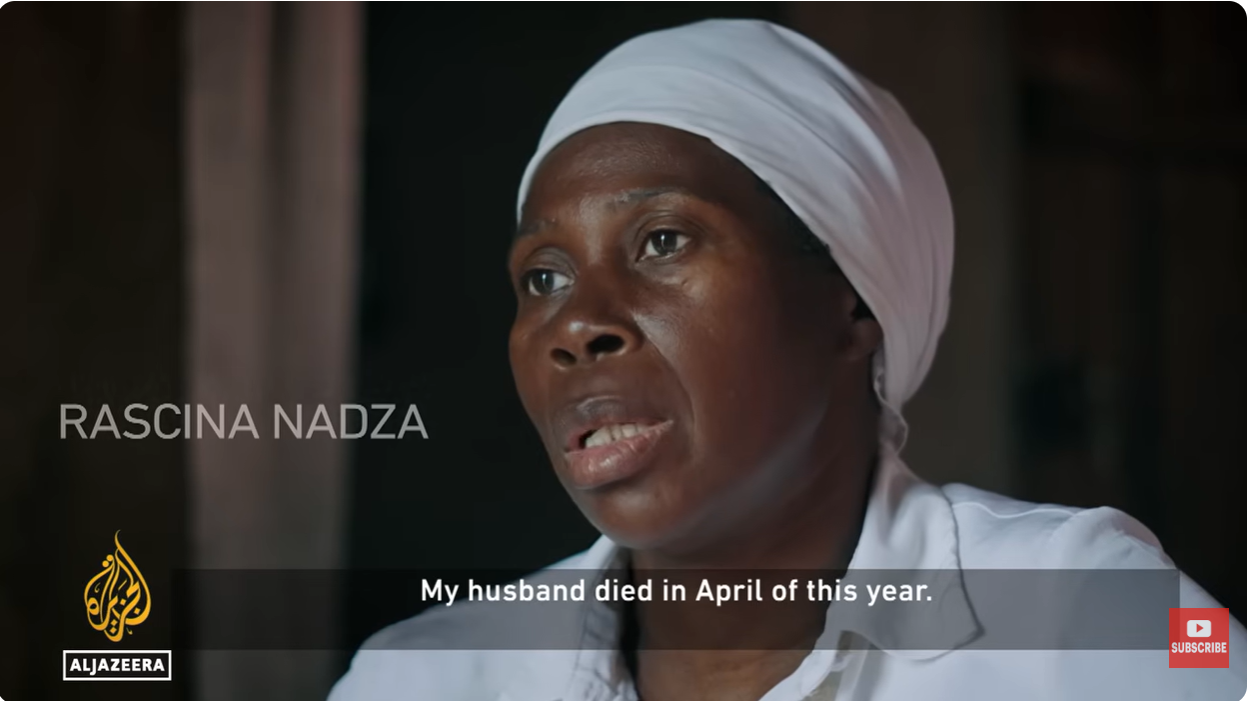
Rascina Nadza, who lost her husband to HIV, is also living with the disease alongside her daughter. Credit: Al Jazeera.

Recklessness implies that a decision-maker knew of a serious risk and consciously disregarded it. International health institutions issued explicit warnings. UNAIDS reported that the sudden withdrawal of the largest contributor to the global HIV response had disrupted treatment and prevention programmes across low- and middle-income countries. Its modelling suggested that the permanent loss of previously available support could produce more than six million additional HIV infections and four million additional AIDS-related deaths by 2030.

These are projections, not observed deaths that can automatically be attributed to a single government decision. They nevertheless establish that the risks were neither obscure nor unforeseeable.

If decision-makers continued dismantling programmes after receiving credible warnings, without adequate mitigation or transition arrangements, the boundary between negligence and recklessness becomes increasingly difficult to maintain.

What responsible development practice now requires

The disruption in Mozambique should prompt more than emergency efforts to replace lost American funding. It should generate a structural response that protects essential services while shifting greater authority towards African governments, institutions and communities.

1. Create an African mechanism to protect essential health services

The African Union, Africa CDC, African Development Bank and regional economic communities should establish a jointly governed contingency mechanism for sudden external-financing shocks.

It should provide temporary bridge financing for services whose interruption creates immediate public-health risks, including antiretroviral treatment, diagnostic laboratories, medicines, supply chains and community-based patient support.

This would not replace donors or remove governments’ responsibility for domestic financing. It would give countries time to manage an orderly transition rather than allowing a political decision abroad to become an immediate health emergency.

2. Make responsible withdrawal a requirement for development partners

Major donors should be required to prepare responsible-exit arrangements before terminating programmes supporting essential public services.

These should include advance notice, health and social impact assessment, consultation with governments and affected communities, continuity arrangements for medicines and patients, transfer of data and technical capacity, and transitional financing.

Where corruption or misconduct justifies immediate suspension, patients and frontline services should still be protected. Donors should also publish country-level assessments of terminated programmes and finance corrective measures where preventable disruption has occurred.

3. Turn African health-financing commitments into funded national plans

Mozambique should develop a costed and publicly accessible transition plan for its HIV response, identifying which externally supported services will enter the public health system, what domestic resources will fund them, which services remain vulnerable and how continuity will be monitored.

Other highly aid-dependent African countries should conduct similar vulnerability assessments, with parliamentary, audit and civil-society scrutiny.

The Abuja commitment to health financing remains important, but headline percentages are insufficient. Governments must show that additional resources actually reach primary care, medicines, health workers, community services and high-burden populations.

Domestic financing should increase progressively, but governments should publish realistic transition timelines rather than presenting immediate self-reliance as financially achievable.

4. Diversify financing without creating new dependencies

African countries should reduce dependence on any single donor through a broader financing mix: increased domestic expenditure, bilateral and multilateral support, African development finance, pooled procurement, carefully designed solidarity levies and stronger action against illicit financial flows and avoidable revenue losses.

Diversification should not mean replacing one dominant donor with another, nor shifting costs towards poorer households through regressive taxation, user fees or poorly designed private financing.

Health financing must also be linked to debt reform, international taxation and extractive-revenue governance. Governments cannot sustainably expand health expenditure if debt servicing continues to consume the fiscal space required for essential services.

5. Give African communities decision-making power as well as responsibility

Localisation should be judged by who controls finance, information and programme decisions, not simply by how many local organisations implement externally designed projects.

Mozambican civil-society organisations, networks of people living with HIV, women’s and youth organisations, and community health workers should have formal representation in financing and transition bodies and direct access to flexible, multi-year funding.

Governments and donors should publish how much funding reaches African and community-led organisations, what decision-making authority accompanies it and how affected communities are represented.

Community knowledge is indispensable, but resilience must not become a justification for replacing paid staff, medicines and institutional infrastructure with voluntary labour.

The discharge travelled; accountability must do the same

The story of Mozambique’s Gaza Province reveals a basic truth about contemporary development: power and accountability remain geographically separated.

The authority to interrupt funding was concentrated in Washington. The health consequences were displaced onto Mozambican clinics, workers, families and communities. Those who controlled the trigger were insulated from much of the resulting harm.

That is why the dismantling of USAID should not be described merely as a bureaucratic reorganisation or unfortunate policy error. It was a negligent discharge of American power: a poorly evidenced and abruptly implemented intervention whose risks were foreseeable and whose consequences travelled across borders.

But stopping there would let the wider development system off too easily and the appropriate response is not an uncritical defence of the old aid system. A structure that leaves essential African health services exposed to political decisions in another country is itself deeply insecure. The longer-term task is to build nationally led, diversified and publicly accountable systems in which African institutions possess greater control over priorities, finance and implementation.

Those who controlled the trigger were insulated from much of the resulting harm.

African governments and institutions have harder work ahead: building fiscal capacity, diversifying financing, strengthening regional mechanisms, protecting essential services and transferring meaningful authority towards national and community institutions.

Donors have obligations too. A country may change its foreign policy. It may reduce aid. It may close programmes. What it cannot reasonably do is exercise enormous power over other societies and then treat the consequences of that power as somebody else’s responsibility. The destination should be neither permanent dependence nor sudden abandonment. It should be a negotiated transition towards African-led systems with the money, institutions and political authority needed to make that leadership real.

Until then, there is one lesson from the other Gaza that should be difficult to forget:

the trigger may be pulled in Washington, but the bullet does not stop at the border.

Climate Resilience in Africa: Six Priorities for an Era of Rising Risk and Falling Aid

By Bolaji Ogunfemi


Between 2005 and 2024, climate-related disasters disrupted the schooling of 130 million children in Eastern and Southern Africa and caused US$1.3 billion in direct damage to education infrastructure. UNICEF and Dalberg put the resulting loss in lifetime earnings at up to US$140 billion, rising towards US$380 billion by 2050 if nothing changes. That is one sector, in one sub-region, over two decades. It is also the first regional attempt to price what climate change is doing to a generation’s prospects and the number should reframe how climate resilience in Africa is discussed. Adaptation is not a line item competing with development spending. It is development spending.

Africa contributes less than 4 per cent of global greenhouse-gas emissions. The asymmetry between what the continent emits and what it absorbs is well rehearsed. What receives less attention is the timing problem now emerging: the evidence base for action has never been stronger, while the financing architecture assumed by almost every UN adaptation strategy is shrinking.

What is actually happening to Africa’s climate?

The WMO State of the Climate in Africa 2024 provides the sharpest recent picture. Average surface temperature across the continent in 2024 sat roughly 0.86 °C above the 1991–2020 baseline, with North Africa warming fastest. Sea-surface temperatures reached record highs, and marine heatwaves covered nearly 30 million km² between January and April, the largest area since monitoring began in 1993.

The agricultural consequences were immediate. Aggregate cereal yields in southern Africa fell 16 per cent below the five-year average; Zambia lost 43 per cent and Zimbabwe 50 per cent. Low water levels at Lake Kariba, Africa’s largest man-made reservoir, cut hydropower output and produced prolonged outages across two economies.

Flooding did comparable damage at the other extreme. Heavy long rains from March to May affected more than 700,000 people in Kenya, Tanzania and Burundi. In West and Central Africa, floods affected over four million people, with several hundred deaths and hundreds of thousands displaced — Nigeria, Niger, Chad, Cameroon and the Central African Republic worst hit.

One continent, one year, both tails of the distribution.

Why is the development response falling behind?

The 2024 Africa Sustainable Development Report, produced jointly by UNDP, the UN Economic Commission for Africa, the African Union Commission and the African Development Bank, found that fewer than 6 per cent of the 32 measurable SDG targets it reviewed are on track for 2030. Those targets cover poverty, hunger, climate action, peaceful societies and global partnerships. The report is explicit that progress on climate action (SDG 13) is trending negatively, and that weak national statistical systems make performance on governance targets difficult even to measure.

That last point deserves more weight than it usually gets. A country that cannot measure its exposure cannot cost its adaptation needs, and a country that cannot cost its needs cannot make a credible claim on international climate finance. Data capacity is not a technical afterthought. It is a precondition for access to money.

Who bears the cost?

Vulnerability in Africa is unevenly distributed along lines that are already familiar to social policy analysts: age, gender, displacement status and geography.

Children carry a disproportionate share. In the Comoros, UNICEF reports that 54 per cent of Comorian children live in areas exposed to at least four major environmental risks. The response, the Climate Action for the Last Mile initiative, run with the Korea International Cooperation Agency and the Comorian government, integrates adaptation into schools, health facilities and water systems, with young people organised through a Young Climate Champions network. It is a useful model precisely because it treats resilience as a property of ordinary public services rather than a standalone programme.

Displaced populations are similarly concentrated in harm’s way. UNHCR’s Focus Area Strategic Plan for Climate Action 2024–2030 records that 84 per cent of refugees and asylum seekers fled from highly climate-vulnerable countries in 2022, up from 61 per cent in 2010. The plan identifies 22 countries of particular concern and sets objectives across protection, solutions, resilience and adaptation.

Gender runs through both. UN Women’s toolkit on financing gender equality in the green transition in sub-Saharan Africa has been used to train policymakers across twenty countries, and the results are visible in national commitments. Liberia’s revised NDC targets a 64 per cent emissions reduction by 2035 and pledges 20 per cent of all climate finance to women-led cooperatives, smallholder farmers and entrepreneurs. That is a costed, auditable commitment rather than a statement of intent and the standard other NDCs should be held to.

What are UN agencies proposing?

UNEP’s Africa office frames NDC implementation as a route to food security, youth enterprise and economic expansion rather than as an environmental obligation, and convenes ministries through the Ecosystem-based Adaptation for Food Security Assembly, established in 2016 by African environment ministers.

WHO’s Regional Office for Africa, with the Africa Enterprise Challenge Fund, has designed blended financing models that combine public and private capital for climate-resilient health systems, with technical input from the Adaptation Fund and delegates from Benin, Burkina Faso, Uganda and Zimbabwe.

UNESCO focuses on the resource base. Africa has over 30,000 km of coastline and river basins covering 64 per cent of its land area, assets central to Agenda 2063 and the African Blue Economy Strategy, and increasingly stressed by sea-level rise, pollution and over-abstraction.

Three lines of work stand out.

The financing contradiction

Here is the difficulty. Every strategy above assumes a functioning international financing environment. That assumption is now questionable.

WFP expects to receive roughly 40 per cent less funding than in 2024, a projected budget of US$6.4 billion against US$10 billion. In West and Central Africa alone, 55 million people are projected to face crisis-level hunger during the June–August 2026 lean season, with over three million at emergency level, double the 2020 figure. Nigeria, Chad, Cameroon and Niger account for 77 per cent of that caseload.

The evidence in Mali is instructive: areas where rations were reduced saw acute hunger rise 64 per cent since 2023, while areas receiving full rations recorded a 34 per cent fall. Assistance works. It is being withdrawn anyway.

So the honest reading is this. African governments are being asked to build resilience at precisely the moment external financing contracts, and the recommendation to “mobilise international climate finance” is becoming weaker advice each year. Domestic resource mobilisation, regional pooling and rigorous prioritisation are no longer supplementary options.

An infographic summarising climate resilience priorities in Africa.

Afrodevelopment’s priorities

  • Treat adaptation as core public expenditure, not a donor project. Resilience should be built into education, health and water budgets since the sectors the UNICEF loss-and-damage analysis shows are already absorbing the costs.
  • Fix the measurement problem first. Weak statistical systems block both policy design and finance access. Investment in national statistical offices and meteorological services has a higher return than most single adaptation projects.
  • Cost and audit gender commitments. Liberia’s 20 per cent climate finance pledge to women-led enterprises is the benchmark: specific, quantified, checkable.
  • Prioritise ruthlessly under contraction. With WFP funding falling sharply, governments and partners need explicit triage criteria rather than proportional cuts across programmes.
  • Build blended finance capacity now. The WHO–AECF model deserves replication, but it requires public-sector skills in structuring instruments that most health ministries currently lack.
  • Protect regional water and coastal governance. Transboundary basins covering 64 per cent of the continent cannot be managed nationally; regional bodies need mandates and budgets, not communiqués.

Conclusion

Climate resilience in Africa is now a fiscal question as much as an environmental one. The science is settled enough to act on, the vulnerability mapping is good enough to target, and the institutional models exist. What is thinning is the money and the strategies drafted in 2024 have not yet caught up with that. The next generation of national adaptation plans will be judged on whether they are honest about that constraint or continue to budget for a level of external support that is no longer arriving.


Sociology and its imperatives for human development in Africa

By Bolaji Ogunfemi

A great many people will agree that the individual is to society what people are to human development. Society comprises clusters of individuals while human development is positive change in the lives of people. Development academics, practitioners, and researchers have roundly highlighted human capital as crucial to a country’s journey on the path to development. This could not have been clearer than when teaching a university module on Individual and Society. Its one broad focus is to scan societal problems using sociological imagination from various sociological perspectives. In the course of the teaching and research, it became clear that, being one of the most popular modules in the discipline of Sociology, its utility as a conceptual receptacle for engaging problems of social development in modern African society is undeniable.

Sociological imagination of development issues

Sociological imagination is the linking of individual experiences with the larger society. It seeks to relate personal troubles affecting individuals with public issues that require societal intervention. Africans are still faced with numerous welfare challenges, although it would be disingenuous to ignore the fact that progress is being made, albeit slowly.

Development matters peculiar to the continent, including urbanisation, industrialisation, population growth, inequality, migration, healthcare, and food security, are seemingly personal troubles but are also embedded in a larger social context. The continent’s burgeoning youth population continues to grow without corresponding expansion in shared prosperity through industrialisation and employment. According to the ILO’s Global Employment Trends for Youth 2024, three in four young people in sub-Saharan Africa lack secure work, and Africa’s youth labour force is projected to grow by 76 million by 2050, while all other regions face a contraction in young workers. Rapid urbanisation as a public concern has created widening inequality, generated insecurity, and frustrated access to already decaying infrastructure.

Communicable and non-communicable diseases continue to pose enormous challenges across the continent, compounded by chronically low budgetary commitments to the health sector. Africa CDC reported in April 2025 that more than two decades after the Abuja Declaration, only three countries, Rwanda, Botswana, and Cabo Verde, have consistently met or exceeded the 15 per cent national budget target for health, whilst over 30 African Union member states remain well below the 10 per cent benchmark, with some allocating as little as 5–7 per cent. Addressing these issues requires acknowledging them as encounters between social structures and individual interactions in everyday life, and that is precisely where sociology has something urgent to say to development.

Sociological explanations for Africa’s development dilemma

Sociological thought concerns the various theories or lenses through which society and its issues are understood, and a systematic manner of observing individuals within society. Four sociological perspectives underlie explanations of the predicament facing Africans and the threats to their freedom, dignity, and self-realisation.

The conflict perspective, enshrined in the narrative of inequality, is premised on the exploitation, immiseration, and alienation of the people, thereby producing the inevitability of clashes between social groups. In the face of relative economic growth owing to capitalism, the gap between the haves and the have-nots continues to widen. The latter are increasingly compelled to sell their labour to the wealthy owners of the means of production and the politicians who enable them. Oxfam’s latest analysis found that just four of Africa’s richest billionaires hold $57.4 billion in wealth, more than the combined wealth of 750 million people. The Commitment to Reducing Inequality Index 2024 further reveals that in sub-Saharan Africa, the top 10 per cent of wage earners capture two-thirds of all labour income, while the bottom 50 per cent takes just 3.3 per cent. The conflict lens demands that development actors ask who benefits from existing arrangements and who is structurally excluded.

The functionalist perspective maintains that the people are the lifeblood driving development. They are both the means and the outcomes of all development endeavours. There can be no people without development, and no development without the people. Each are critical parts of an engine oiling one another to achieve a stable, equitable, and progressive society. Where institutions fail to perform their functions, whether schools, health systems, or labour markets, the entire social organism suffers. The 2024 Africa Sustainable Development Report, published jointly by UNDP, the UN Economic Commission for Africa, and the African Development Bank, found that Africa is on track to reach fewer than three of the 32 SDG targets assessed, with setbacks recorded for eight of them, a damning verdict on the failure to invest sufficiently in the institutions that underpin human development.

Symbolic interactionism advocates for a better understanding of the divergences in people’s social, economic, and personal situations in conditioning relations between and among them. Its central focus is explaining the dynamics in inter-personal and inter-group relations through structures or institutions such as education, religion, bureaucracy, and law. Wellbeing, as a concept that closely captures the spirit of this perspective, strongly relates to happiness and life satisfaction. When institutions communicate messages of exclusion or indignity, whether through discriminatory access to education or unequal treatment before the law, they shape how individuals relate to one another and to the state, and in so doing, either enable or constrain development.

The post-modernist perspective explains contemporary African society as characterised by forces of globalisation and the influence of social institutions on people’s lives. In development parlance, it focuses on the pursuit of individual freedom and how modernisation and bureaucracies have promoted or limited it, often at the expense of the broader society. As individuals evolve and societies develop, so does their understanding of development, as criteria and benchmarks are continuously renegotiated. Societies should be permitted to define what constitutes a good standard of living within the context of individuals’ own perceptions of what basic conditions must be met.

The reality of this approach is illustrated with striking clarity among the Dinka and Nuer ethnic communities of South Sudan, where cattle ownership serves as the primary measure of wealth and social standing, a framework entirely rational within that context but invisible to externally imposed development metrics. A sojourn in the country opens the eyes to how profoundly value systems shape development realities on the ground.

Some individuals will inevitably depend on external support to overcome poverty, the elderly, the disabled, those dispossessed by conflict or climate shock. Yet the social processes that create the conditions for development determine their access to that support. Any economic, socio-cultural, or environmental transformation must have individuals at its core. Prescriptions for how economies, societies, and environments should be transformed also start and end with people.

The case for human infrastructure

If people are so fundamental to development, a critical question follows: why is Africa not more purposefully investing in what might be called human infrastructure?

Physical infrastructure, roads, ports, power grids, attracts enormous attention from governments and donors alike. The African Development Bank estimates that Africa invests only 4 per cent of its GDP in infrastructure, compared with 14 per cent in China, and that bridging the infrastructure gap could increase GDP growth by an estimated 2 percentage points a year. Yet the continent’s greatest deficits are not only in concrete and steel but in the capabilities, institutions, and social systems that determine whether people can participate in, contribute to, and benefit from development. At the AfDB’s 2024 Annual Meetings, the Bank’s Director of Human Capital, Youth and Skills Development argued that “a healthy, productive and innovative workforce is essential for Africa’s transformation” and that investing in people’s businesses and skills is as critical as building physical assets. Human infrastructure encompasses the quality of education systems, the robustness of public health, the strength of social protection, and the architecture of civic participation.

Sociological analysis compels a rethinking of development priorities on the following grounds:

  • Invest in capabilities, not just growth rates — Economic growth that bypasses the majority is sociologically incoherent. Africa’s real GDP is forecast to grow at around 3.8–4 per cent, yet this pace falls well short of the 7 per cent annual growth needed to meet SDG targets, and even that growth has not translated into proportionate reductions in poverty or inequality. Governments and donors must measure prosperity by its distribution, not its aggregate.
  • Strengthen social institutions — Schools, health systems, legal frameworks, and community organisations are not peripheral to development; they are its architecture. Neglecting them produces the structural exclusion that all four sociological perspectives, in different ways, describe.
  • Centre local knowledge — The post-modernist insight is practical as much as philosophical. Development frameworks designed without the participation of the people they affect, ignoring local epistemologies and value systems, routinely fail. The Dinka and Nuer example is not an academic curiosity; it is a warning.
  • Address inequality structurally — The conflict perspective reminds us that poverty in the midst of growth is not an accident; it is a product of political choices. Oxfam’s Commitment to Reducing Inequality Index 2024 warns that Africa faces a double inequality crisis: extreme inequality alongside weak government commitment to fight it, with four in five countries cutting budget shares for education, health, and social protection since 2022.
  • Build social cohesion — Symbolic interactionism highlights that development is not only about material conditions but about how people relate to one another and to their institutions. Societies fractured by distrust, discrimination, or elite capture cannot sustain development gains.

The UNDP’s Africa launch of the 2023/24 Human Development Report noted that with a median age of 19.7 years, Africa is the world’s youngest continent, and that realising its demographic dividend requires investing urgently in education, skills development, and job creation, particularly for women and youth. The 2030 Agenda’s commitment to leaving no one behind is not merely an aspiration; it is a sociological imperative. Africa’s development trajectory will be determined not only by its infrastructure gap but by whether it invests, with equivalent urgency, in the human systems that make development meaningful, sustainable, and just.

Strategies for sustainable cities in Africa

The Sustainable Development Goals have increased conversations around how cities and towns can be planned and organised to fulfil their roles as drivers of sustainable development. Making cities and human settlements inclusive, safe, resilient and sustainable is the focus of goal seven. This topic is of crucial importance to Africa’s development efforts for some reasons and at the same time present challenges to achieving sustainable cities in the continent.

Africa’s population is projected to double in the next three decades more than any other continent of the globe with an additional 1.2 billion people to the current inhabitants of 1.3 billion people. Rapid and uncontrolled population growth strain towns and cities by increasing the pressure on administrative structures, infrastructure, and services.

By 2050, more than half of the continent’s population is estimated to live in cities. This has been attributed to different causes including the availability of better services, fall in the agrarian economy, conflict and the continent’s huge youth population. It is common knowledge that few cities are currently equipped to adequately support its population in meeting their wellbeing needs. Poor urban planning, decaying infrastructure, increasing slum communities, ineffective local administration, and corruption are some challenges cities on the continent face. These challenges would worsen the human security of the inhabitants if not urgently tackled.

Urban poverty is growing in Africa. Poor people in cities and towns face peculiar poverty challenges than those living in rural communities. People, especially the youths, for lack of livelihood opportunities emigrate to urban centres fueling the worsening poverty indices there. Gentrification is also creating internally displaced persons most of whom end up creating another slum in another part of the city and worsening their vulnerabilities.

Added to these challenges are disasters. Fire outbreaks and flooding are the two most common disasters experienced in urban areas on the continent. Both disasters destroys properties, disrupts access to services, result in loss of lives, and promote displacements. When people lose properties to these disasters and in the absence of social protection, multidimensional poverty rises as they struggle to get back on their feet. Different studies have linked fire outbreaks to informal setlements and tenure insecurity. Besides, those living in slums or unplanned settlements are not only more exposed to these disasters but also lose more valuables. The city of Lagos, Nigeria’s economic hub, has already recorded more than ten fire incidents this year.

From the circumstances already explained regarding the grave problems confronting the achievement of sustainable cities on the continent, few practical strategies are proposed.

Sustainable energy: With increasing population, some countries in the continent have the largest inadequate access to electricity globally including Nigeria, Kenya and Tanzania. Addressing the electricity gap on the continent requires a multifaceted approach that prioritises contextual circumstances including public-private partnership. Electricity generation must be devoted to the lowest administrative level in the country while providing adequate manpower and resources to effectively respond.

Basic services: Much of the urban centres on the continent still lack sufficient provision of basic services including water, sanitation, healthcare, and educational facilities. Urban administrators need to start thinking of ingenious ways of promoting equitable access to these services. One approach that could work is increased community-led initiatives supported by municipal authorities. When people are given a voice to raise their service concerns and deliberate with authorities regarding how best to address them, it not only unlocks their empowerment but also heighten sustainability.

Security: Safety and security concerns are rife in towns and cities. Sections of urban communities often those with inadequate infrastructure and services are likely to experience higher insecurity. Absence of facilities like public toilets can aggravate public health safety and lack of well-built roads and effective transportation systems can result in social exclusion of segments of the population like the physically disabled. In poor, crowded and unplanned communities, houses are built without considerations for shelter standards. Alongside the provision of these services and access to basic necessities, community policing in line with the United Nations guidelines can supplement inadequate policing arrangements.

Pollution control: Urban centre on the continent face pollution challenges. However, in research, policy, and practice, waste management is the prioritised pollution in African cities. Even this is inadequately managed due to inappropriate laws, not implementing regulations, limited funding, and low technical capacity. While these need to be provided, more attention should be paid to other pollution like air to guarantee the wellbeing of inhabitants. Research, urban planning and green means of energy and transportation will be crucial to pollution control.

Disaster risk management: With rapid urban population growth comes concerns for disasters. Flooding and fire are the most common disasters in urban centres and the local administration and the people are not often equipped to deal with the risk. While more research, funding and infrastructure are needed, a participatory and information sharing approach is vital. The City Resilience Action Planning Tool, CityRAP, developed by UN-Habitat between 2014 and 2019 is a laudable approach at enhancing the resilience of urban centres.

Poverty eradication: Poverty, in this era of the Sustainable Development Goals should be measured as deprivation in material and non-material needs. An income-focused view of poverty excludes destitution, oppression, sense of personal freedom, and esteem to mention a few, which represent some acute poverty indices. The overall societal arrangement in an urban area including laws, land governance, infrastructure, and institutions, both formal and informal, determine opportunities for poverty eradication and must be fashioned to achieve this. Population boom can also be an opportunity for enhancing and guaranteeing the substantive wellbeing of the people.

Bolaji Ogunfemi is the Administrator of Afrodevelopment. He can be reached on b.ogunfemi@afrodevelopment.org or on Twitter @BolajiOgunfemi.

Humanitarian health assistance and local government synergy in Angola

The Sustainable Development Goal three seeks to ensure healthy lives and promote well-being for all peoples at all ages. Providing humanitarian assistance is crucial to reducing vulnerabilities of people who are forcibly displaced. In Angola, the UNHCR is partnering local administrative authorities in delivering access to essential medicines and vaccines on a sustainable basis.

For refugees and host populations, availability of adequate health services can have significant impact on their wellbeing. Increased demand for health services by both population groups can stretch local resources and create a shortage in personnel and medical supplies.

In the municipality of Lóvua under Lunda Norte local administrative area, UNHCR is supporting the government in developing the capacity of health workers. Lóvua has just one health centre to serve about 12,000 inhabitants and 20,000 Congolese refugees. This health centre has no doctor meaning the 13 nurses must be trained to undertake and handle medical cases.

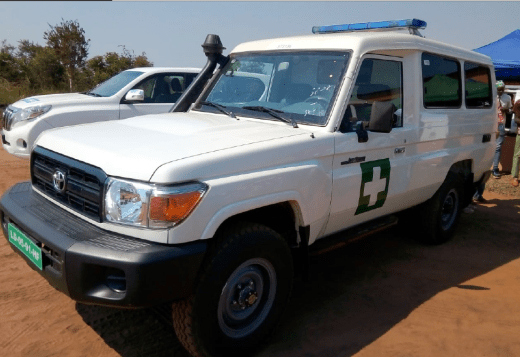
UNHCR is partnering Medicos del Mundo and the local authority to engage in biweekly immunisation campaigns, weekly health consultations at three health posts and an ambulance to provide transportation to the health centre in case of emergency.

Ambulance donated by the UNHCR

Commendable as these assistance may seem, there are still challenges ensuring sustainable health delivery and access. Dr. Antonio Muzala who is Lóvua’s Municipal Director of Health explained, “we have a challenge with human resources as we are understaffed, for instance, we do not have a proper doctor onsite.” Other top challenges are lack of basic health infrastructure and poor sanitation and demanded the UNHCR render more support in the area of capacity building.

However, inadequate government investments stifle sustainable healthcare delivery and humanitarian funding is inadequate to meet rising needs of both the host and refugee populations. Even when government funding is available, localities with humanitarian presence may be excluded.

With limited funding, resources and capacity, humanitarian support with government cooperation should aim at the following;

  • Targeting – Mitigation measures must be targeted at the most vulnerable community members irrespective of their migration status. This would most likely be politically influenced but policies that are more humane will benefit refugees and also serve the host communities interests.
  • Context-specific issues – Efforts should be made to address prominent health issues peculiar to the community. The reason behind this is that previously existing health challenges can be exacerbated with the influx of refugees. A good starting point is enhancing access to adequate water, sanitation and hygiene materials.
  • Strengthen services – Humanitarian actors and the government should focus on ensuring the sustainability of few delivered services. Available resources can be utilised to scale up services particularly in the areas of capacity, infrastructure, operations and maintenance with an eye on medium term sustainability.
  • Promote human security – Two means through which human security can be promoted are protection and empowerment. A factor that straddles both means is access to employment opportunities. Stakeholders need to formulate the delivery of assistance in a manner that can better stimulate economic activity within the host community. Self-reliance is key to restoring their dignity, as well as their ability to earn a living.
  • Integrate psychosocial health – Vulnerability has multiple dimensions which impacts people’s sense of self, psyche and behaviours. Both displaced and host populations’ experience of loss exposes them to trauma that may hinder their desire to engage in health seeking or employment activities.

Featured image credit to UNHCR/Pumla Rulashe.

Bolaji Ogunfemi is the Administrator of Afrodevelopment. He can be reached on b.ogunfemi@afrodevelopment.org or on Twitter @BolajiOgunfemi.

Download the UNHCR document here.

Africa and measuring the sustainable development goals

Many African countries lack the capabilities to plan, manage and do the research required for successful formulation, implementation and evaluation of policy. Data from the continent is generally perceived as inaccurate, unreliable, untimely or inexistent. The reasons behind this are numerous.

While statistics bureau exists in most countries, they are sometimes insufficiently funded. This condition hinders opportunity for recurrent training of staff on modern data collection strategies, promotes production of statistics with apprentice touch, and encourages aimless governance. Production of adequate, accurate and illuminating data is compromised in such instances.

Another reason can be found in lack of evidence-based national development plans. Most African countries develop national development plans at some point, but these are commonly designed without backing from data. Consequently, a chaotic plan, destined to fail even before implementation is produced. More hurtful to countries’ finances is funds wasted in implementation.

Independence of national statistical offices is suspect in most African countries. Government leadership sometimes interfere in their activities and data deemed unfavourable are sanctioned. In other climes where data are not denied, they are willfully ignored and have no impact on policy decisions or implementation.

In other climes, where data are available, they are willfully ignored and have no impact on policy decisions or implementation.

A further argument is that more Africans are not leading the narratives around survey and census data produced on the continent. While data is invaluable to ascertaining a country’s human development status, analytical and critical interpretations are what makes them not only nationally relevant but also brings them in comparable standings to regionally and globally determined metrics. For data to be useful and benefit those for whom they are collected, pattern of interpretations must conform to their realities.

As a last example, there a lack of development communication initiatives. Investments in public opinion polling is not a common practice of African national governments. Although the private sector may be making efforts in filling this role, it is largely insufficient. Governments on a more consistent and evidence-based basis need to acquire greater insight into the human development conditions of their citizens.

As a last example, there is a lack of development communication initiatives.

Each of the Sustainable Development Goals which are seventeen in number have targets which requires indicators. These indicators will be useful in monitoring changes over time towards attaining the goals. Having critically accessed the recurring themes of sustainability and equity embedded in these goals, a few practical suggestions for African governments will suffice;

  • Result-informed indicators – There should be a focus on collecting data based on policy indicators nationally relevant to those targets specified in the SDGs. Although, the goals are ambitious, African countries should prioritise attainability dictated by their current development standing. This is crucial since dynamics vary from country to country and they will serve as foundation for judging progress as well as initiating and monitoring policies. Where necessary, qualitative measurement should be adopted for unquantifiable issues.
  • Basic needs – Most national development plan and statistics historically revolves around basic needs like health and education, a demonstration of their importance to sustainable human development. Since many African countries are performing fairly on key development indicators, promoting access to basic needs should be a focus. It also ought to guide national planning for investment, production and consumption.
  • Public expenditure – Measurement of progress in achieving the SDGs should accommodate tracking of government spending among sectors. Attention should be paid to what sectors or population segments are prioritised, allocation within sectors, and regions or settlement types. For example, some countries might need to fund tertiary education more than primary.
  • Development communication – One aspect of development communication which is particularly crucial to measuring the SDGs is citizen participation or feedback. Production of diverse local content in local languages and seeking citizen engagement would be helpful in setting benchmarks at the grassroots level and evaluate implementation. Collaborations should also be sought with civil society, academics, districts and local government, private sector, and donors.
  • Human security – One other option is adopting a human security approach to SDGs measurement. It enables a synthesis of linkages, complementarities and interdependencies between the numerous underlying causes of poverty. Conversely, it also allows identification of negative implications of policies or programs in one sector on other sectors. African countries can design a national development framework containing concepts from the human security approach to serve as benchmark for policy formulation, implementation and progress monitoring.

It must, however, be acknowledged that given the complexity of the SDGs, not all targets can be accurately measured. Efforts at developing appropriate measurements can greatly benefit from improved research culture in the continent which Elsevier is helping to address. The Centre for Global Development also partnered with African Population and Health Research Centre through the Data for African Development Working Group to encourage research for policy development on the continent. Wealth of research will be invaluable in determining which indicators provide the best insights and much more needs to be done in this regard.

One or a mixture of these measurement approaches can be adopted as what works for a country might not for another. But in the case of the latter, there would be tradeoffs and difficult choices which national governments must be willing to accommodate and address.

Bolaji Ogunfemi is an early career development consultant with interest in Africa and founder of Afrodevelopment. He can be followed on Twitter @bolajiogunfemi or email b.ogunfemi@afrodevelopment.org.

Sanitation security model: importance, explanation and uses

Bolaji Ogunfemi

Sanitation is one of the most intractable development challenges of the twenty-first century. It has garnered greater attention from the UN, development actors, policymakers, national governments and donors since the declaration of the Millennium Development Goals in 2000. With the launching of the 2030 Agenda for Sustainable Development in 2015, rhetoric on sanitation discourse has now turned to three overarching sector goals; ending open defecation, universal access to basic services; and progress towards safely managed services.

The signs of the time indicate that a model is required to facilitate scientifically insightful description and explanation of the phenomenon both of which are critical to improving theory and practice. Models utilise concepts and inferences to achieve an understanding of the world through symbols that enable scientists to communicate their thoughts to and receive from others. Often, they are named based on an analogy between the major system it describes – here sanitation, and another different system – here security.

The four key propositions guiding the model are that; sanitation directly impacts human security, sanitation indirectly impacts human security through security, sanitation indirectly impacts human security through sustainable sanitation and, sanitation impacts human security through both security and sustainable sanitation. The model asks a basic question; how and why does sanitation generate or deprive certain freedoms in a context?

In order to see what models do, and how they can teach us things, we have to understand the details of their construction and usage.

Sanitation Security Model 1Sanitation security model

Sanitation being a human activity, human agent can be described as the capacity of a human being or person to act in whichever manner drawing on his abilities, knowledge, cognition, values and behaviour within his ever-changing social milieu.

Space is about the physical, sensorial and cognitive relations between humans’ embodiment and surroundings and the idea that certain things or some events belongs somewhere or somehow in particular at a time. It is composed of territory, place and time. Toilet or latrine are artefacts and manifests as the technology aspect of sanitation.

The excreta aspect concerns excreta disposal measures as well as secondary order management stages of containment, transportation, treatment, and disposal or re-use.

Value is the root component of security and relating this to sanitation, they refer not only to the standards that uphold defecation practices of a people or society but also their worldview towards norms attached to excreta management. Sources of threats can be assessed based on types (sociocultural, environmental, technical, economic and political or direct or indirect), level, frequency, timing and severity. They cannot be definitive as they vary depending on the context.

Vulnerability is human or system susceptibility to harm due to inherent weakness in relation to factors that threaten the value. Sanitation related vulnerability originates from three broad categories; chronic (related to basic needs), contextual (arising from social, economic and political processes and contexts of human life like age, gender, social engagement, built and natural environment) and extreme (concerning armed conflicts and natural disasters) which are all interrelated and interdependent.

It is when vulnerable people or systems are unable to mitigate and/or adapt to the threats to specified values and the ineffectiveness of their response options that they become termed as being ‘at risk’ or ‘risky’ therefore necessitating some form of external assistance.

Strategies adopted in addressing risks can be grouped into ex ante (preventive strategies) and ex-post (adaptation and mitigation). While the former is used to refer to measures adopted to prevent a risky event from happening exercised at the individual, collective and governing levels or ensemble, the latter concerns the actions taken to deal with experienced losses after the risk event has occurred with the purpose of minimising effects of losses and facilitate recovery.

Adaptation refers to the exploration of new practices and functions of reducing risk due to changes in social and environmental processes and occurs at the individual and collective levels. Mitigation is enshrined in policies, programmes and approaches of governing institutions.

The next phase of sustainable sanitation involves the sociocultural, environmental, technical, economic, and political dimensions consulted in assessing which means will best provide sustainability in a context. It can be adopted either as a preventive or an adaptation/mitigation strategy at the communal and governing levels.

Human security can be said to be the outcome of the sanitation security model with sanitation, security and human security as contributing factors. In other words, security and sustainable sanitation function as intermediate predictors of how and why sanitation impacts human security.

Freedom from fear is to be free from acts of fear of physical aggression or threat to bodily integrity regarding sanitation related activities. Sanitation should be able to facilitate people’s access to human basic needs like food, water, shelter, health, and education and other related constructs which the customs of a country renders it indecent for people to be without. Freedom from indignity concerns absence of fear that an individual or collectives’ dignity will be attacked. This is a tricky because what constitutes dignity cannot be locked in a box of global definition but assessed on a culture by culture basis which is globally divergent. Dignity as a concept in sanitation discourse also revolves around human rights.

The sanitation security model has the characteristics of being people-centred, multi-sectoral, comprehensive, context-specific and prevention oriented.

The utility of the model can be broadly classified into two;

Research: Models serve as an interface between theory and empirics in understanding a phenomenon of the world. This model can be adopted by quantitative, qualitative, mixed method and policy researchers to tease out and connect factors previously thought to be isolated. Researchers can link their own indicators to the variables in explaining aspects of the world to guide formulation of policies or designing of interventions. It also helps to integrate the security-humanitarian-development sectors and illuminate interconnections or shortcomings in terms of security, governance, international responses and local resources.

Project management/Policy: Politicians and other decision-makers have to act on the basis of available evidence from sound diagnosis. The model can help in designing sanitation projects and policies differently better from the way it is currently undertaken. A recurring theme in sanitation service delivery and policy has been the patriarchal assumptions of national governments and development or humanitarian planners and implementers about local processes and so-called beneficiaries of development or humanitarian assistance. With the design of seven project management matrices drawn from the model, it seeks to reorient the internal organisation and workings of the sanitation aid and service delivery.


Bolaji Ogunfemi is a PhD student in London. He can be reached @bulgie05 on Twitter or email b.ogunfemi@afrodevelopment.org.

Experience and reflection on sanitation and human security in South Sudan

Bolaji Ogunfemi

It was the afternoon of Tuesday 4th of July, 2017, different thoughts ran through my head as I was approaching departure lounge of Heathrow Airport Terminal 4 to check in for my flight to Nairobi.

I was travelling to Juba, South Sudan for the fieldwork of my research titled- Sanitation and Human Security in South Sudan, and up to this point, I really did not know what to expect as I embarked on the journey.

As I handed over my passport to the airline staff at the counter, she questioned me out of curiosity of my reasons of going to South Sudan. Her questions centred on my intentions of flying to a war-torn country where people are escaping from in their thousands. Little did I know that I would be answering her questions and defending my choice all through my stay in the country.

My connecting flight to Juba landed the following day at 9:20am at the airport. The airport was a makeshift tent with old wooden planks, some of which have huge holes in them as flooring. I went to the immigration section to have my passport stamped then waited to get my bag which arrived few minutes afterwards. After about two hours driving around the city in search of hotel rooms, I eventually got a relatively cheap one at Hai Thora which is about five minutes’ walk from the University of Juba at Atlabara.

I was determined to hit the ground running because of the insecurity and expensive living in the capital.

My first port of call the next morning was the UNICEF office at Tong Ping with Dr.Leben Moro, the Director of Centre for Peace and Development Studies at University of Juba. UNICEF is responsible for coordinating the humanitarian and development sanitation interventions in the South Sudan and they also provide funding to partners through their WASH Cluster. Dr. Moro also connected me with UNDP and the Ministry of Electricity, Water, Dams and Irrigation where I received some secondary documents. The documents provided me with a greater insight into the national context of South Sudan and policy background to the research topic.

Key informant interviews commenced a week after reviewing secondary materials to guide my research and ensure appropriate questions are asked. “Current sanitation situation in South Sudan is horrible, so we are really struggling in this bizzare setting”, a WASH staff of one of the UN specialised agency told me. This opinion resonated with all other WASH partners in the country.

South Sudan’s prolonged conflict has defied solution and this has affected sanitation and human security in the country both at an individual, communal levels and national levels. Cost of sanitary materials has sky rocketed up to twenty times than it obtained in 2013.

Getting latrine materials to the war-ravaged states up north like Jonglei and Wau can only be done by air because the roads are bad and unsafe. This option is expensive and frustrates ability of humanitarians to provide people with needed sanitation services considering the additional challenge of flooding common to the region.

“Some will tell you my priority is to get food for my children, how can you expect me to buy a slab of about 1,000 SSP when I can go and buy a bag of maize or sorghum so my children can survive. When such statements come up, you cannot push.” The WASH Manager of a national NGO which used to implement CLTS before the outbreak of the December 2013 war recounted.

He attributed the cause of breakdown in economic activities and low motivation for sanitation to displacements due to fighting not only from the power tussle at the centre but also inter-communal cattle rustling, as cattle plays key economic role in South Sudan.
Technical challenges are also significant as the black cotton soil is common in the country. This type of soil collapses toilets and latrines or could also cause them to sink during rainy seasons. In fact, one of the reasons behind the closure of the Tong Ping POC camp north of the capital city was because of the black cotton soil which resulted in the collapse of numerous latrines during rainy seasons.

However, ingenious measures are being introduced by WASH partners which include using drums as reinforcement of pit and burning the soil around the pit wall to prevent them from collapsing. Unfortunately, these drums as well as other materials like pit liners and cement can only be transported by air which is prohibitively expensive. Gumbo village under Rejaf  Payam, situated about 6 kilometres south-east of Juba across the White Nile, where some of the highest cholera cases in Juba and its environs have been reported has some areas with this type of soil.


Socio cultural preference for open defecation is another recurrent theme in my finding. Some partners spoke of their experiences, whereby community elders in villages declared that they do not need latrines. This thought was adopted from the idea that their fore fathers practiced open defecation and nothing happened to them. “They can be very resistant and you know they influence, so if you have no way of mobilizing them they can stop the project,” an NGO staff said.

Although hygiene education is slowly changing the narrative, the Director General of Rural Water and Sanitation called for intensified hygiene awareness. According to him, taboos like not sharing latrines with in-laws and not defecating near houses of abode are propagated by poor education level.

Open defecation is also rampant in Juba where people told me they are staying in their current place of abode temporarily and may be moving to another place in a moment’s notice while those who had no plan to leave do not own the land and cannot consider building a latrine. Land is a highly sensitive and politicized phenomenon in Juba. “If you dig ordinary hole in your compound today, you may be asked to leave the next day” a participant of the youth focus group discussion held in Lologo, a flood-prone and host community south of the capital told me.

Fewer people in this community reported sharing latrines compared to Gumbo as many practice open defecation. At night, residents including those who own latrines, defecate in plastic bags and then dispose it in the morning due to insecurity. A participant of the men group discussion said: “If you go out at night, it might be your neighbour that will shoot you, nobody will come to your rescue, and if anyone does, no medical facilities is available to treat you.”

Those who practice open defecation in Gumbo refrain from going into the bush even during the day and would rather use open fields like the one pictured below or the bank of the Nile River. “If you go into the bush, you can get shot, so I always use the neighbour’s toilet,” a participant in the women’s focus group discussion explained. Women express significant stress and shame using their neighbour’s latrine and avoid use particularly during their menstrual cycle.

The WASH Strategic Framework formulated in 2011 recommends community oriented sanitation service delivery approach. Opinion is, however, divided between the government, WASH Cluster, NGO and donors about the practicality of CLTS.
While nearly all partners see CLTS as impractical, the Director- General of Rural Water Supply and Sanitation at the Federal Ministry of Electricity, Dams, Irrigation, and Water Resources argued otherwise. He explained that abandoning CLTS and focusing on building latrines may be unsustainable in the long term as displacements of people from their communities continues.

He showed me photographs taken at Lopa village in Torit, Western Equatoria which became open defecation free in May 2016 but later became empty after the fighting of July 2016 broke out. Although he praised the effort of the people to become open defecation free with only triggering, “this will impact negatively on the cause of sanitation ladder to grow as people will have to start from the scratch every now and then” he said.

The Directors of Public Health for Kator and Rejaf Payam were also affirmative in their belief that a CLTS oriented sanitation service delivery will not work in urban settings including the capital Juba. The results of past implementation in the capital in 2009 were poor according to the Director- General reasons for which he attributed to lack of urban planning, non-implementation of existing ones, geometrical displacement of people from villages to the city and incessant population movements within the town. He identified a communal latrine system for the densely populated peri-urban communities as a possible solution.

The aim of the research is to test my SANITATION SECURITY model with the aim of making theoretical and analytical generalization beyond the case of South Sudan as to the connections between sanitation and human security.

Target two of goal number six of the United Nations sustainable development goals seeks, ‘by 2030, to achieve access to adequate and equitable sanitation for all and end open defecation, paying special attention to the needs of women and girls and those in vulnerable situations’

Data collection was rounded up at the UN House Protection of Civilians 1 camp in Juba with the disabled focus group discussion the morning of the day that I left the country. Despite the SDGs slogan of leaving no one behind, none of the latrines in the PoC is suitable for use by the physically vulnerable. Unfortunately, I was unable to present findings to the WASH partners as I had planned.

SAM_0662
A block of latrine at the PoC 1,Juba

Away from academic activities, I got an invitation from the Centre for Peace and Development Studies at the University of Juba to give a presentation to Masters Students on my research journey from the formulation of research topic to fieldwork.

Savouring the cool breeze on a bodaboda – local name for commercial motorcycle – as I made my way to the airport on the hot sunny afternoon of August 23rd, the key challenge WASH partners told me they face rang through my head. Influencing behaviour change is bedeviled by numerous limitations in the country few of which I have highlighted above.

However, it can be better triggered using a modified CLTS approach which doesn’t prioritise facilities but behaviour change through traditional practices that respects and protect the environment. In addition to this, a multipronged approach is necessary as the technocratic classification of human basic needs preferred by planners and implementers are incompatible with people’s reality.

If South Sudan is the least country globally to find at least basic latrine and facing significant human security challenges then why can I not choose it as my case study?


Bolaji Ogunfemi is a PhD student in London and founder of Afrodevelopment. He can be reached on twitter @bulgie05 or b.ogunfemi@afrodevelopment.org.


Biomedical engineers from across Africa are collaborating to build medical devices

Biomedical engineering can save lives. It draws on and integrates knowledge from disciplines like engineering, computer science, biomedical sciences, and public health as well as clinical practice. This knowledge is combined to improve health—often through the design of medical devices for diagnosis, treatment and rehabilitation.

Most of Africa’s medical equipment is imported. “Equipment graveyards” become the final resting place for medical devices that aren’t suited to local conditions. This can include dust, heat, humidity and an intermittent supply of electricity. Some machines are discarded because hospital and clinic staff haven’t been trained to operate them or because replacement parts are not available when they’ve broken.

African countries need to start producing and developing their own medical devices. A cadre of suitably skilled biomedical engineers is needed for this sort of innovation to take root. That’s what prompted a number of African universities to establish the African Biomedical Engineering Consortium. We advance education and research in biomedical engineering across the continent.

Skills development

We know that biomedical engineers alone won’t suddenly make Africa a world leader in medical device innovation. Other elements are needed—like well-equipped laboratories that enable experimentation and prototyping. Funding to support the translation and scaling of prototypes is another. Manufacturing infrastructure is important. So are regulations to ensure equipment safety and structures to oversee intellectual property management.

But the consortium’s focus is on producing people to bring innovation to life. Now five years old, it brings together established and emerging biomedical engineering programs at African universities to develop the continent’s capacity for innovation in health technology. The network has grown stronger as more member institutions have introduced degree programs in biomedical engineering.

Now some members of the consortium have turned their attention to a more focused transfer of skills and knowledge across participating universities. This is being done with the aid of funding from the European Commission.

We’ve launched a capacity-building project to support the training of postgraduate students. Six African universities are involved. These are Addis Ababa University; Cairo University; Kenyatta University; Uganda’s Mbarara University of Science and Technology; the University of Cape Town (UCT); and the University of Lagos. Italy’s University of Pisa is also participating.

The first round of applications has just been concluded. Our postgraduates will be drawn from the six participating African universities as well as others on the continent. Each student will receive a full scholarship to cover tuition, travel and living expenses. This will support training for Master’s and PhD candidates at partner institutions outside their home countries over a five-year period.

The initiative particularly focuses on building skills that address African needs by engaging students in projects that arise from local realities. Examples include:

Creating prosthetic limbs for landmine victims

Using mobile phones, along with custom-built applications, as diagnostic tools in remote areas.

Eliminating the need for expensive imaging equipment that’s not always readily available, by developing software that enables 3D visualisation of the anatomy from ubiquitous X-ray images.

We’ll start training the first cohort of students in 2018.

Building the academic base

But training emerging scholars isn’t enough. Africa needs more academics who can navigate the interdisciplinary environment needed to develop technological solutions to health problems.

That’s why the project also supports academics who want to improve their skills. They can travel between African partner universities to develop their research and training capacity. An academic from a new biomedical engineering programme in Uganda, for instance, could work with colleagues at UCT, then share teaching approaches back home. Or a lecturer from Cairo could spend time in Lagos teaching and sharing research methods.

This is also a good way for universities to harmonise their biomedical engineering curricula and benchmark them against those of partner universities. And it’s a way to promote the sharing of scarce resources.

This article was originally published on The Conversation and can be read here https://theconversation.com/africa-needs-to-start-creating-its-own-medical-technology-heres-how-84642

Why Africa’s Biggest Economy is Falling Behind on Sanitation and 7 Ways Donors Can Make a Difference

Bolaji Ogunfemi

Nigeria, Africa’s biggest economy, has a staggering 130 million people without access to adequate sanitation according to WaterAid Nigeria.

The country is witnessing rapid population growth such that urgent planning is needed to effectively pursue meeting the sanitation target of the Sustainable Development Goals.
In 2013, United Nations projected that the country by 2050 will be the third most populous globally after India and China at an estimated growth rate of 2.8 percent.

The country’s 2013 Demographic and Household Survey revealed that just 36 percent of households in urban areas use improved sanitation facilities, 40 percent use shared facilities and 23 percent use non-improved sanitation facilities.  In rural areas, 25 percent use improved sanitation facilities, 13 percent use shared facilities, and 61 percent use unimproved sanitation facilities.

In November 2016, in its global urban sanitation report titled, ‘Overflowing Cities: The State of the World’s Toilets’, WaterAid ranked Nigeria as the third country globally by number of urban dwellers without safe and private toilets. The report also states that 13.5 million people in Nigerian cities practice open-defecation.

“For every one urban dweller reached with sanitation since 2000, two people were added to the number living without.  A general lack of awareness among people and about benefits of good sanitation, and government neglect of slums, makes a bad situation even worse”, the report stated.

There is bias against urban sanitation in Nigeria as governments, both at the state and federal levels, as well as donors focus more on rural areas. Reasons for this include the belief that Community-Led Total Sanitation is only applicable in rural areas, open defecation exists only in rural areas, and that the most marginalised and poorest live only in rural areas.

In Abuja, Nigeria’s capital, open defecation is common as significant proportion of residents live in slum- like conditions.  Within the city, any available open space or roadside gutters are used for defecation by homeless people, residents and other members of the community due to lack of toilets both in private and public spaces. Residents of suburban communities like Lugbe, Nyanya and Kubwa have poor access to sanitation, making the practice of ‘short put’ (a local term for wrap and throw) widespread as it is in many communities with inadequate toilet and latrines in the country.

WaterAid’s report featured Ago Egun, a slum in Lagos, where it is revealed that everyone in the community take a boat ride to defecate into the surrounding lagoon. Residents of other slum communities like Ijora-Badia, Makoko, JMJ and Dustbin Estate in Ajegunle engage in similar practices.

In response to the state of sanitation in Nigeria enumerated above, a set of recommendations to donors will be essential considering the relevance of development cooperation to sanitation services in the country.

  • Transparent expenditure data and reporting – Donors must develop ingenious ways of ensuring sanitation expenditure data and reporting are transparent and improved in Nigeria. Donors can also insert a clause in their project or grant proposals, lending policies or credit agreements that the disbursement of funds must be publicly available irrespective of who the implementing or partner organisation is. Reports should mirror how much the principles of equality, transparency, participation and accountability are incorporated in programmes and projects.
  • Work with local government – Donors should work with the local government in funding sanitation in Nigeria particularly in establishment of functional WASH departments and advocacy. Additionally, the federal and state governments must begin to transfer responsibility to these local authorities in order to strengthen their sanitation functions. However, achieving this without adherence to constitutional fiscal arrangements and the states putting an end to cutting or blocking funds will be hard. This approach will encourage parallel focus on both urban and rural areas, prioritisation of sanitation in state and local government budgets and enhance institutional capacity building.
  • Invest in sanitation and hygiene in schools and other non-household settings – At present, the Ministry of Education have no active national school sanitation campaign and inclusive strategy and manuals on including WASH in primary and junior secondary school curriculum. An initiative of UNICEF, the School Sanitation and Hygiene Education has not been fully introduced in Nigeria and requires donors’ attention. The same applies to other non-household settings like markets, motor parks and health centres which are also severely lacking in sanitation facilities across the country.
  • Prevent and address corruption – Donors must take steps to address issues of corruption in their interventions. They should prioritise tracking of sanitation finances beyond the Value for Money framework to address wanton misappropriation and stealing of funds. This also requires transparent disbursement, monitoring and supervision of hardware components to be incorporated into project plans in ensuring disadvantaged people move up the sanitation ladder.
  • Engage and support the private sector – Building private sector capacity and interest in delivering products and services also demand attention. Training of local masons in the development and design of locally appropriate, low-cost and durable latrines which also meets technical hygiene standards is an area of intervention that has been relatively ignored by donors. This can be fast tracked by introducing state or local government level sanitation expos and trainings supported by a number of initiatives such as microfinance, credit schemes, and formal or informal loans.
  • Coordination – There is a need for donors to better coordinate their activities and seek to complement each other’s efforts in the sector. It is important to begin to consider equitable distribution of interventions across the states to avoid duplication of efforts. Spreading out of funding across states will reduce the burden of complex donor procurements rules among public authorities which could hinder ownership and timely execution of works as well as eliminating conflicts in policy.
  • Consider other means of support than traditional bi-lateral aid – Although government ownership is critical to sustainability of interventions, sanitation donors in Nigeria need to start thinking of additional means of pursuing this beyond the counterpart contribution or inter-governmental fiscal approach which has proved to be unsustainable. Technical and programmatic support, policy advice and human rights advocacy are other viable measures that can be tapped into.

While flexibility and openness to learning are required among donors, the federal government must show political will and provide stronger sector leadership by drawing up a national sanitation policy and strategy to complement the national open defecation roadmap. The aim will be to make states strengthen their existing systems and structures by allowing local governments to fully undertake their sanitation responsibilities as enshrined in the 1999 constitution. This will create clearer enabling institutional environment for development cooperation to be more effective, sustainable and address inadequacy of sanitation funding and access.

This blog was originally written by Bolaji Ogunfemi for WASHFunders.

Bolaji Ogunfemi is a PhD student and Founder of Afrodevelopment.

Africa’s opportunity and reasons for a reset

At a time of great uncertainty in world affairs, Africa serves its interests best by putting its house in order. That process begins by identifying and addressing the region’s major challenges as well as setting clear, limited and actionable policy priorities. Africa has never been short of plans or programmes of actions. From the Lagos Plan of Action (1980) to the African Priority Programme for Economic Recovery (1985), the Cairo Agenda for Action (1995), the New Partnership for Africa’s Development (2001) and now Agenda 2063: The Africa We Want and its First Ten-Year Implementation Plan (2014-2023), Africa has shown a willingness address its myriad of problems.

Three major weaknesses have historically seriously impeded the implementation of Africa’s plans of actions and cast a long shadow over Agenda 2063. The Plans have been too ambitious; marred by weak political commitment; and, quite often, ignored the political contexts of the member States. The scope of the various plans has been so wide-ranging that they would tax the managerial capacity of the best resourced organisation.

Weak political commitment has been reflected in the fact that the Member States consistently fall behind in paying their assessed contributions to the African Union (AU), deepening the organisation’s dependence on donors. An important but less remarked factor, in the high unpaid assessed contributions, is that most of the countries mired in or emerging from conflict are unable to meet their financial obligations to the AU. Although African leaders pledged in 2015 to contribute 100 percent of AU’s operating budget, 75 percent of programme budget, and 25 percent of its peace and security budget; it is not certain whether and when these commitments will be met.

In the past ten years, African leaders have commissioned two major reviews on the functioning and effectiveness of the African Union: Audit of the African Union (The Adedeji Report, 2007); and The Imperative to Strengthen Our Union (The Kagame Report, 2017). The report of the Third Ministerial Retreat of the Executive Council (The Mekele Report,2016) offered ideas on domestication of Agenda 2063 and its flagship projects. Reviewing the scope and feasibility of NEPAD or Agenda 2063 did not occupy centre stage in those reports. But two of them offered comments on AU’s scope of work. The Adedeji Report, for example, remarked that AU’s “activities spread too widely for it to be effective in playing the role envisaged for it.” The Kagame Report spoke of “a fragmented organisation with a multitude of focus areas.”

Africa now has an opportunity and several reasons to reset its priorities. The opportunity for a reset is offered by the election or appointment of new heads of the three major regional institutions. The President of AfDB assumed office in November 2015; The Chairperson of AU in March 2017; and the Executive Secretary of the Economic Commission for Africa was appointed in April, 2017.

There are several compelling reasons for a reset and re-alignment of priorities. The first reason is the observation in The Kagame report that donors are expected to contribute 74 percent of the AU’s 2017 operating budget of US$439 million. Donor contribution to the AU peace and security budget is about 90 percent. This excludes UN financial allocations for peacekeeping and peacebuilding in Africa which respectively was 76.4 percent (US$ 6.3billion out of US$8.3 billion) in 2015-2016 and 82.2 percent (US$512 million out of US$623 million) in 2007-2015.

The second reason is the bleak prognosis for increased international financial support for Africa. Official Development Assistance is less likely to increase, given the rising nationalist orientation in several donor countries.

Third, although the prices of commodities, on which most African countries depend for foreign exchange earnings, have climbed from their lows, they are far from the levels that will close the huge fiscal deficits that many countries are experiencing.

Three actions are required in pursuit of a reset of regional priorities. The first step is to re-conceptualise the nature of the region’s challenges. As I argue in my forthcoming book, Africa in Transition: A New Way of Looking at Progress in Region, due for release in May, “the future prospects of individual African countries will critically depend on their ability to manage the three deficits that have cast a long dark shadow over their development experience. These are stability deficits, organisational deficits, and scientific and technological deficits. How to address these deficits is the critical challenge for Africa’s development.” This analytical insight has huge practical implications for the roles that the three major regional institutions should play in Africa’s development.

Source: The Guardian Nigeria

Nigeria ranked 152 in global human development index – UNDP report

Nigeria has been ranked 152 amongst the 193 United Nations (UN) member states in the latest Human Development Index (HDI) for 2016 released by the United Nations Development Programme (UNDP).

The country is followed closely by Cameroon in number 153 and Zimbabwe in 154 position.

The report places Nigeria below neighbouring Ghana which is placed 139, Gabon, 109, Zambia also in 139, Equitoria Guinea, 135.

The report however showed a positive outlook for the country as it revealed 13.1 % increase in human development in the last ten years under review (2005-15).

NDI indicates the number of people with access to education and other basic amenities. Human development is about enlarging freedoms so that all human beings can pursue choices that they value. HDI is a composite statistic of life expectancy, education, and per capita income indicators, which are used to rank countries into four tiers of human development
The global report was officially launched on 25th, March 2017 in Stocklom, while the Nigeria version was launched Tuesday.

According to the report, Norway tops the log as the number one country in the Hunan Development Index and it’s closely followed by Switzerland and Australia which came joint second, Germany on the fourth position and Denmark number five.

Speaking at the public presentation of the Report in Abuja yesterday, UNDP Resident Representative, Mr Edward Kallon, called for an urgent action by the government to sustain the gain.

“The report shows that between 2005 and 2015, Nigeria’s HDI increased from 0.466 to 0.527 – a 13.1 percent increase.

“This is encouraging, but given the humanitarian challenges already alluded to, and the economic recession witnessed in 2016, there is an urgent need to design policies and programmes to ensure that the upward trend in human development is not reversed.

“As the 2014 HDR aptly noted success is not automatic and gains are not necessarily permanent,” he said
He noted that the Economic Recovery and Growth Plan (ERGP) recently launched by the Federal Government outlined several medium-term policies and programmes that could keep Nigeria on a positive development trajectory.

He said that the ERGP focused on restoring growth, investing in people and building a globally competitive economy.

Kallon pledged the UNDP commitment to supporting both the Federal and State Governments in implementing programmes addressing the simultaneous eradication of poverty and significant reduction of inequalities and exclusion in Nigeria.

He described UNDP as the UN’s lead agency with a mandate to eradicate poverty, and promote sustainable human development everywhere in Nigeria.

According to him UNDP has produced several National HDRs focusing on various issues defining development in Africa’s largest economy.

He said that the reports would continue to shape policy interventions and public debate around many development issues affecting millions of people in the country.

“The economic growth is necessary but not sufficient condition for human development; it is possible to achieve high levels of human development even with modest levels of growth.

“What matters is the source and spread of growth; and how growth is managed and distributed for the benefit of everyone,” he said.

He said that addressing the twin problems of economic recession and humanitarian crisis facing the country called for tough policy choices.

“We should utilise the opportunity provided by the national launch of this report to promote policy dialogue, at both national and sub-national levels.

“To enrich programmes aimed at implementing the ERGP and Growth Plan, the SDGs and AU’s Agenda 2063 to ensure that human development is realised for everyone and that no one is left behind,” he said.

Minister of State, Budget and National Planning, Mrs Zainab Ahmed in her remarks said the launch of the report was timely.
She however warned that the current humanitarian crisis in the North East is capable of reversing the gain if not properly addressed.

She said, “The downturns in 2016 occasioned by the weak growth of investment, trade and productivity as well as the humanitarian crises are capable of infusing a reversal trend if not curtailed early.

“It is common knowledge today that violent extremism is the greatest threat to human improvement, especially the achievement of inclusive growth as put forward by the UNDP’s principle of Universalism. Following the Arab Spring which was initially thought of as a Mediterranean issue, violent extremism has engulfed the Lake Chad region, taking its toll on lives and property in North East Nigeria. Over 14 million people are affected with 1.8 million internally displaced persons to carter for in the three most affected States.”

She stressed that human development could also be elusive when there is insecurity and deprivation.

“Human Development cannot be for everyone in a situation where 14 million people are insecure and deprived,” he said.

Mrs. Ahmed however commended President Muhammadu Buhari’ Administration for reducing the level of violence in the country.

He noted, “the level of violence has been significantly scaled down but over 4.4 million people in the region need food, clothing and shelter. The Government of Nigeria has mobilised available resources to ameliorate the situation.

Speaking on the report, she said it provided an independent and data-based analysis of why certain groups tend to be more disadvantaged and highlights the persistent barriers to achieving sustainable human development for all.

She said it also came on the heels of the recently launched NERGP which she said would define the country’s economic trajectory for the next four years, by ensuring sustained, inclusive and diversified growth.

“The Report comes as Nigeria works to actively implement programs aimed at meeting the Sustainable Development Goals, both at the Federal and State levels,” she said.

The minister said Government was working proactively to address the current economic challenges facing the Nation, and to implement policies and programmes that promote human development.

According to her the programmes would ensure that `no one is left behind’.

“We will also strive to ensure that the disadvantaged communities receive the extra support they need. This includes those living in conflict affected areas, women and girls, and rural communities.

“Government is striving to ensure that human development progress is more resilient to shocks, such as epidemics, economic challenges, conflicts.

“This is being done through the development and implementation of sound policies and through social investment programmes,” she said.

Source: The Nation